Winter Waterfall Hikes In North Carolina
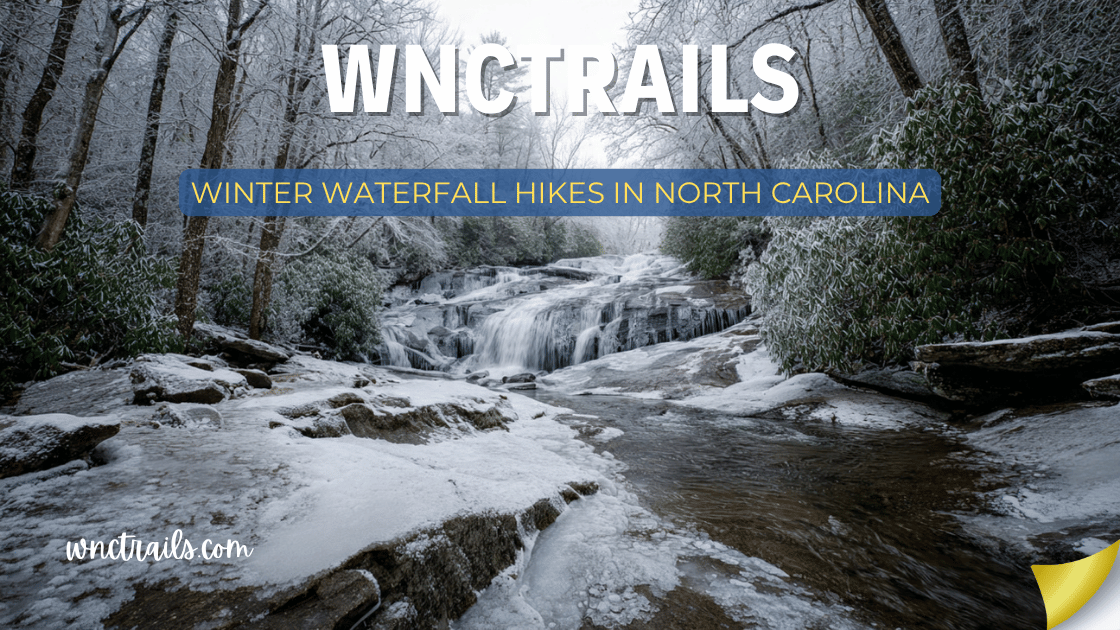
Winter is the most underrated season for waterfall hiking in North Carolina — and the most rewarding for those who know what they’re doing. When the leaves are gone and the crowds have retreated to the lowlands, WNC’s waterfalls reveal themselves differently: ice formations build on surrounding rock faces, spray from the falls freezes mid-air into crystalline curtains, bare branches open up views that summer closes completely, and trails that see hundreds of visitors per day in July see none in January.
The waterfalls themselves don’t disappear in winter. Many run surprisingly full from December rainfall and occasional snowmelt. And the ice — when temperatures dip into the teens and twenties for several consecutive days — transforms already spectacular falls into scenes that look like they belong in Iceland or the Canadian Rockies, not the southern Appalachians.
This guide covers the best winter waterfall hikes in North Carolina: what to expect, when to go, how to stay safe, and where to find the most extraordinary ice and solitude the season produces.
Winter safety first: Winter waterfall hiking is the most technically demanding season in WNC. Ice on trails, frozen spray zones, Parkway closures, and rapidly changing weather all require preparation that summer hiking does not. Read the safety section of this guide before planning any winter waterfall hike above 3,000 feet.
Winter Waterfall Hikes in North Carolina (2026 Guide)
Recommended Tools
Disclosure: This page may contain affiliate links.
- Water Shoes — Check current pricing
- Rain Jacket — Check current pricing
- Dry Bag — Check current pricing
Winter in WNC: What Actually Happens at Waterfalls
The Ice Formation Phenomenon
When temperatures drop below freezing for several consecutive days — typically in January and February — the spray and mist zones around WNC’s waterfalls begin to freeze. The process is gradual and visual: first a thin rime of ice forms on the surrounding rock faces, then icicles build from the lip of the falls, then ice columns grow from the base up as splash freezes layer by layer.
In extreme cold (sustained temperatures in the single digits and teens°F), some falls partially or fully freeze — the water flow dramatically reduced or stopped entirely, replaced by a sculpture of ice that bears the shape of the original waterfall in frozen form.
What typically freezes vs. what doesn’t:
| Waterfall Type | Freeze Likelihood | Conditions Required |
|---|---|---|
| Small seeps and side cascades | High — often fully freeze | 3–5 days below 25°F |
| Wide curtain falls (Looking Glass) | Partial — edges freeze, center flows | 5–7 days below 20°F |
| High-volume plunge falls (Rainbow, Whitewater) | Low — rarely freeze at base | Sustained extreme cold |
| Roadside spray zones | High — icicles and ice sheets common | 2–3 days below 28°F |
| Gorge wall seeps | High — spectacular ice formations | 4–6 days below 25°F |
Winter Water Levels
Contrary to what many visitors expect, WNC’s waterfalls don’t run low in winter. December and January bring significant rainfall across the mountains, and the lack of leaf canopy means less evapotranspiration — more rain reaches the streams directly. Winter water levels are typically similar to spring levels at many sites. The dramatic reduction in summer drought hasn’t occurred yet, and the streams run full.
The exception: During extended cold snaps, streams above the falls can freeze, temporarily reducing flow to some cascades. This is what creates the most dramatic partially-frozen waterfall effects — water trickling through or over existing ice structures.
Daylight and Planning
Winter days are short in WNC. Sunrise is around 7:30 AM in December and January; sunset is around 5:15 PM. This gives hikers roughly 9.5 hours of usable daylight — adequate for any hike on this list, but requiring earlier starts and tighter planning than summer allows. For long winter hikes (Rainbow Falls, Big Creek), a pre-dawn start is essential.
Winter Accessibility: Which Trails Stay Open
This is the most important planning consideration for winter waterfall hiking in WNC. Not all trails and roads remain open.
| Site | Winter Access | Notes |
|---|---|---|
| Looking Glass Falls | ✅ Year-round | US-276 stays open; parking may ice |
| Hooker Falls (DuPont) | ✅ Year-round | DuPont roads open; lower elevation |
| Catawba Falls | ✅ Year-round | Access road stays open in most winters |
| Mingo Falls (Cherokee) | ✅ Year-round | Paved access; staircase may be icy |
| Whitewater Falls | ✅ Year-round | NC-281 stays open; parking area open |
| Dry Falls | ✅ Year-round | US-64 stays open; paved path may ice |
| DuPont waterfalls | ✅ Year-round | Lower elevation; generally accessible |
| Pearson’s Falls | ✅ Most of winter | Call ahead; preserve has seasonal hours |
| Glen Falls | ⚠️ Variable | Access road may close in heavy snow |
| Rainbow Falls | ⚠️ Variable | Trail open but approach road conditions vary |
| Linville Falls | ⚠️ Variable | Blue Ridge Parkway closes in winter |
| Crabtree Falls | ⚠️ Variable | Parkway section closes seasonally |
| Graveyard Fields | ❌ Often closed | Blue Ridge Pkwy closed most of winter |
Blue Ridge Parkway winter closures: The Parkway closes sections — sometimes for months at a time — due to ice, snow, and maintenance between November and April. Check nps.gov/blri for current closure status before any Parkway-dependent winter waterfall trip. Do not assume a section is open because it was open last week.
Quick Reference: Best Winter Waterfall Hikes
| Waterfall | Location | Distance | Ice Potential | Winter Access | Crowd Level |
|---|---|---|---|---|---|
| Looking Glass Falls | US-276, Pisgah NF | 0.2 mi | High — edge freezing | ✅ Always open | Very Low |
| Dry Falls | US-64, Nantahala NF | 0.1 mi | High — alcove ice | ✅ Always open | Very Low |
| Hooker Falls | DuPont State Forest | 0.8 mi | Moderate | ✅ Always open | Very Low |
| Catawba Falls | Old Fort, Pisgah NF | 2.8 mi | Moderate | ✅ Always open | Very Low |
| Mingo Falls | Cherokee, NC | 0.4 mi | Moderate | ✅ Always open | Very Low |
| Whitewater Falls | Nantahala NF | 0.2 mi | Low | ✅ Always open | Very Low |
| Glen Falls | Near Highlands | 2.0 mi | High — gorge ice | ⚠️ Check road | Very Low |
| Rainbow Falls | Gorges State Park | 5.4 mi | Moderate | ⚠️ Check road | Very Low |
| Triple Falls | DuPont State Forest | 3.5 mi | High — ledge icing | ✅ Always open | Very Low |
| Linville Falls | Blue Ridge Pkwy | 1.6–3.4 mi | High — gorge ice walls | ⚠️ Pkwy varies | Very Low |
| Crabtree Falls | Blue Ridge Pkwy | 2.5 mi | High — hemlock ice | ⚠️ Pkwy varies | Very Low |
| Courthouse Falls | Pisgah NF | 1.0 mi | High — circular basin ice | ✅ FR road check | Very Low |
1. Looking Glass Falls — Pisgah National Forest (US-276)
Distance: 0.2 miles | Elevation: 2,700 ft | Winter Access: Year-round Ice Potential: High — edge freezing and hanging icicles with sustained cold Winter Highlight: The most iconic winter waterfall image in WNC — icicles framing the falls against the bare winter forest
The winter waterfall pilgrimage destination of Western North Carolina. Looking Glass Falls in winter is a completely different visual experience from its summer version — and many photographers and waterfall enthusiasts consider the winter version superior. When temperatures drop into the 20s°F for several consecutive days, the spray zone on both sides of the falls builds into an ice architecture of hanging icicles, frozen curtains, and white ice sheets that frame the still-flowing center of the cascade.
The surrounding winter forest — bare branches, dark rock, occasional snow on the banks — removes the green distractions of summer and focuses all attention on the falls and ice. The result is a stark, dramatic, and genuinely extraordinary visual experience.
The winter experience: The best Looking Glass winter scenes occur after 5–7 consecutive days with lows in the teens and highs below freezing. The edges of the falls freeze while the high-volume center continues to flow — a powerful water-and-ice duality that no other season produces. The viewing platform at the base of the staircase, which is in the mist zone in summer, is covered in a glaze of ice in sustained cold — transforming the approach itself into an ice landscape.
Winter ice progression:
- Moderate cold (25–32°F for 3+ days): Icicles form on the lip and edges; minor ice sheet growth on surrounding rock
- Significant cold (15–25°F for 5+ days): Heavy icicle curtains on both sides; ice columns growing from the base; the falls begins to narrow as ice encroaches
- Extreme cold (below 15°F for 7+ days): The falls may narrow to a fraction of its width with massive ice formations on both sides; rare but spectacular
Winter photography notes:
- Blue-hour light (20–40 minutes before sunrise) on a clear winter morning with ice on the falls is the finest winter waterfall photography opportunity in NC
- Long exposure (1–2 seconds) blurs the flowing center while keeping ice formations tack-sharp — use a tripod and remote shutter
- The contrast between white ice, dark rock, and the flowing center is extraordinary in flat winter light — overcast days work as well as sunny ones
- Snow on the surrounding bank adds a foreground element that transforms the composition
Winter logistics:
- US-276 stays open in most winter conditions — paved, treated, reliable access
- The parking area may have black ice — carry traction devices and use them in the lot as well as on the staircase
- The staircase railing is essential in icy conditions — grip it and take each step deliberately
- Free; accessible year-round; call the Pisgah Ranger District (828-877-3265) for current icy condition reports
Traction required: Microspikes or Yaktrax strongly recommended in cold conditions — the paved staircase and viewing platform ice over quickly from spray
Coordinates: 35.3025° N, 82.7648° W
2. Dry Falls — Nantahala National Forest (US-64)
Distance: 0.1 miles | Elevation: 3,100 ft | Winter Access: Year-round (US-64 open) Ice Potential: Very High — the alcove behind the falls builds extraordinary interior ice formations Winter Highlight: The walk-behind experience transforms into a walk-through ice cave in sustained cold
One of the most unique winter waterfall experiences in the eastern United States. In summer, Dry Falls lets you walk behind a 75-foot waterfall and stay mostly dry. In winter, the mist and spray that creates this effect instead builds ice formations inside the alcove — icicles hanging from the rock ceiling, ice sheets on the alcove walls, and a glaze of frozen spray on the floor. The walk-behind becomes a walk-through-ice experience that exists nowhere else in NC.
The combination of the 75-foot falls roaring outside, the mist turning to ice on every surface, and the dramatic ice architecture of the frozen alcove interior is a winter spectacle that most people never know to look for.
The winter experience: After 4–5 days of temperatures below 25°F, the Dry Falls alcove begins its winter transformation. Icicles grow from the overhang above. The spray from the falls hits the alcove walls and freezes on contact, building ice sheets that can reach several inches thick. The floor glazes over completely. In the most extreme cold winters, the alcove becomes an ice cathedral — every surface encased, the ceiling draped in icicles of extraordinary length, the walls white with frozen spray.
Winter ice progression:
- Light freeze (3–5 days, 25–32°F): Icicles forming on the alcove ceiling; minor ice glazing on walls
- Moderate freeze (5–7 days, 18–25°F): Heavy icicles; wall ice sheets building; floor fully glazed
- Heavy freeze (7+ days, below 18°F): Near-complete ice alcove; dramatic ice formations throughout; some of the most extraordinary natural ice architecture in the Southeast
Winter photography notes:
- Shooting from inside the ice alcove outward — through hanging icicles with the falls visible beyond — is a framing composition unique to winter at this site
- The ice sheets on the alcove walls catch and diffuse light differently throughout the day — morning, midday, and late afternoon each produce different ice textures
- A tripod and wide-angle lens capture the full alcove ice environment better than handheld shooting
Winter logistics:
- US-64 is treated and reliable in most winter conditions; the Highlands/Cashiers area can receive significant snow, so check road conditions
- The paved path to the falls is the riskiest surface — it ices from spray and drip-off even when the main road is clear
- Traction devices are mandatory at Dry Falls in below-freezing conditions — the paved path is essentially a skating rink in cold weather
- $5/vehicle fee applies year-round; restrooms at the trailhead
Traction required: Mandatory in below-freezing conditions — microspikes minimum
Coordinates: 35.0574° N, 83.2219° W
3. Linville Falls — Blue Ridge Parkway (MP 316.4)
Distance: 1.6–3.4 miles | Elevation: ~3,200 ft | Winter Access: Variable (Parkway closes seasonally) Ice Potential: Very High — the gorge walls develop spectacular ice formations in sustained cold Winter Highlight: Ice-draped gorge walls visible through bare winter branches — the most dramatic winter gorge view in NC
When the Blue Ridge Parkway is open, Linville Falls in winter is transcendent. The 90-foot falls runs through the deepest gorge in the eastern United States, and in winter the bare-branch forest opens up the gorge walls completely — views that summer’s full canopy partially blocks. The gorge walls, which face north and receive minimal direct sunlight, develop ice formations in sustained cold that build into elaborate frozen curtains visible from the overlook trails above.
The solitude is extraordinary. A site that sees hundreds of visitors daily in summer and thousands per day in peak fall can be entirely empty on a cold January weekday — just you, the bare gorge, and the sound of the falls below.
The winter experience: The Erwins View Trail in winter — when Parkway access is available — leads through a stark, silent forest to overlooks where the full gorge opens below. The combination of the 90-foot falls, the 2,000-foot deep gorge, and the ice formations building on the north-facing gorge walls in cold weather creates a winter landscape of extraordinary drama. The falls itself, running full from winter rainfall, sends mist that freezes on the surrounding rock in elaborate patterns visible from above.
Winter ice progression:
- Light freeze: Icicles forming on the rock faces at the gorge rim; ice sheets on north-facing cliff sections
- Moderate freeze: Major ice formations on gorge walls visible from overlook trails; the cliff faces above the plunge pool develop dramatic frozen curtains
- Heavy freeze: Some of the most spectacular ice architecture in the southern Appalachians — entire cliff sections encased, the gorge interior transformed into an ice landscape
Winter photography notes:
- The gorge from Erwins View overlook in snow with ice on the walls and the falls visible below — a composition only possible when the Parkway is open and conditions align
- Long exposure from the overlook in winter blurs the falls while capturing the still ice formations on the gorge walls simultaneously
- Blue hour and golden hour light on the ice-covered gorge walls is exceptional — start before sunrise if the Parkway section is open
Winter logistics:
- Check nps.gov/blri before every winter visit — the Parkway at MP 316.4 may close due to ice, snow, or maintenance with no advance notice
- NPS visitor center is closed in winter; no restrooms or staff on-site
- The trail surfaces can be covered in ice and snow — microspikes essential
- This is the most weather-dependent winter waterfall destination on this list; build flexibility into your plans
Traction required: Microspikes essential when trail surfaces are icy or snow-covered
Coordinates: 35.9544° N, 81.9279° W
4. Catawba Falls — Old Fort, NC
Distance: 2.8 miles round-trip | Elevation: ~1,500–2,100 ft | Winter Access: Year-round Ice Potential: Moderate — lower elevation limits full freezing but ice formations develop in cold snaps Winter Highlight: Accessible winter waterfall hike with 100-ft falls at full flow — the best lower-elevation winter option near Asheville
The most reliably accessible winter waterfall near Asheville — a 100-foot plunge accessible year-round via a trail that stays largely open even in moderate winter weather. At lower elevation than most WNC waterfall sites, Catawba Falls rarely ices over completely, but the surrounding gorge walls and the splash zone develop impressive formations during cold snaps — and the winter solitude here is genuine.
The creek crossings — always a feature of this trail — require extra care in winter when rocks are slick with ice and water is cold enough to be a real hazard if you fall in.
The winter experience: Winter at Catawba transforms the trail character. The hardwood forest is fully bare, opening views of the gorge walls and upper ridges that summer blocks entirely. The falls runs at near-peak winter volume — December and January rainfall keeps the Catawba River high. The splash zone around the 100-foot plunge builds ice formations on the surrounding granite in sustained cold, and the gorge air temperature near the falls can be 10–15°F colder than the surrounding forest in freezing weather.
Winter photography notes:
- The bare winter hardwood corridor along the Catawba River — open and stark with the creek visible throughout — provides a completely different photographic subject than the leafed-out summer version
- Ice formations on the gorge walls surrounding the falls base in cold snaps provide foreground interest
- The large-diameter tulip poplars along the trail, bare against winter sky, are striking architectural subjects in their own right
Winter logistics:
- Access road stays open in most winters — paved and treated to McDowell County standards
- Creek crossings are the main winter hazard — water is cold enough to be dangerous if you slip; waterproof boots and trekking poles essential
- Dogs allowed on leash; free to visit
- One of the few high-quality waterfall hikes fully accessible from I-40 (exit 73) in winter without Parkway dependence
Traction required: Trekking poles essential for creek crossings; microspikes useful on icy trail sections in cold snaps
Coordinates: 35.6281° N, 82.1668° W
5. Triple Falls & High Falls — DuPont State Recreational Forest
Distance: 3.5-mile loop | Elevation: 2,200–2,800 ft | Winter Access: Year-round Ice Potential: High — ledges and overhangs at Triple Falls develop dramatic winter ice Winter Highlight: Tiered granite ledge falls with ice growing on each tier — visually extraordinary in sustained cold
The winter ice formation capital of DuPont State Forest. Triple Falls, with its three-tiered cascade over granite ledges, develops particularly dramatic ice formations in sustained cold — each tier builds its own ice architecture as spray freezes on the ledges between drops. The combination of granite geometry and ice growth creates formations that resemble abstract sculpture more than natural ice.
DuPont’s lower elevation keeps the access roads open and trail surfaces more manageable than high-elevation Parkway sites, making this a reliable winter waterfall destination even when higher-elevation options are inaccessible.
The winter experience: The Little River corridor in DuPont in winter has a spare, architectural quality — bare hardwoods over pale granite, the river running clear and cold, and the sound of falls audible from further away than in summer because there are no leaves to absorb the sound. Triple Falls in cold weather builds ice from the rock ledges outward, with icicles hanging from each tier and ice sheets accumulating on the river banks below.
Winter ice progression:
- Light freeze: Icicles on the Triple Falls ledge overhangs; thin ice on exposed rock edges
- Moderate freeze: Each tier of Triple Falls develops its own ice curtain; the pool below ices at the edges; High Falls builds ice sheets on its broad granite face
- Heavy freeze: Ice connects multiple tiers; the entire face of the falls takes on a sculptural frozen character; High Falls edges freeze while the center continues to flow
Winter photography notes:
- Triple Falls from below in winter, with ice on each tier and icicles hanging from the ledges, is one of the finest ice waterfall compositions in WNC
- The granite river slabs, which are obvious and dominant in summer, become ice surfaces in winter — providing a textural foreground element unavailable in warm seasons
- Golden hour winter light on the pale granite and ice has a warm quality that contrasts beautifully with the cold blue shadows in the ice crevices
Winter logistics:
- DuPont roads open year-round; lower elevation makes them reliable even in winter weather
- Trail surfaces can be slippery — particularly the rocks near the river
- Free to enter; dogs allowed on leash
- Significantly less crowded than summer and fall — often completely empty on weekdays
Traction required: Microspikes recommended near falls; trekking poles for rocky trail sections
Coordinates (Hooker Falls Trailhead): 35.1906° N, 82.6380° W
6. Glen Falls — Near Highlands, NC
Distance: 2.0 miles round-trip | Elevation: 2,800–3,800 ft | Winter Access: Variable (check access road) Ice Potential: Very High — the rhododendron gorge develops extraordinary ice architecture in sustained cold Winter Highlight: Three-tiered waterfalls through a rhododendron-draped gorge thick with winter ice
The finest winter ice waterfall hike in the Highlands area — and one of the most spectacular in all of WNC when conditions align. The narrow rhododendron gorge at Glen Falls creates a microclimate that amplifies winter ice formation: the evergreen rhododendron canopy holds cold air in the gorge longer, the narrow walls concentrate the spray from three cascades, and the shade from both vegetation and gorge walls keeps ice from melting even on winter days when temperatures rise above freezing.
The result, in sustained cold, is a gorge corridor transformed into an ice landscape — rhododendron branches draped in ice, gorge walls encased in frozen spray, and three separate waterfall ice formations stacked in sequence below.
The winter experience: Glen Falls in sustained cold is among the most visually extraordinary winter scenes in Western NC. The 60-foot main falls is the centerpiece — spray freezing on the surrounding rhododendron and gorge walls in elaborate patterns — but the entire 2-mile round trip through the iced gorge corridor is the larger experience. Every rhododendron branch carries ice. The trail surfaces are glazed. The sound of the falls carries further in the cold, still gorge air.
Winter ice progression:
- Light freeze (25–32°F for 3+ days): Icicles on the gorge overhangs; ice on exposed rock surfaces; rhododendron leaf edges rimmed with ice
- Moderate freeze (18–25°F for 5+ days): Heavy icicle curtains at each falls tier; gorge wall ice sheets; rhododendron branches glittering with ice coating
- Heavy freeze (below 18°F for 7+ days): The gorge is transformed — cascades dramatically slowed or narrowed by ice growth; entire rhododendron canopy sections ice-coated; one of the finest natural ice displays in the southern Appalachians
Winter photography notes:
- Ice-coated rhododendron branches as foreground framing the falls — a winter-exclusive composition completely unavailable in any other season
- The narrow gorge concentrates ice formations vertically — use a vertical frame to capture the full height of ice columns growing from the pool base
- Mid-morning winter light penetrates the gorge best in December and January when the sun angle is lowest — shoot between 10 AM and 1 PM for the best gorge illumination
Winter logistics:
- The Overflow Road access can be snow-covered or icy after winter storms — check current conditions before driving
- The trail descent is 600 feet one-way on normally rocky terrain that becomes iced in winter — microspikes are mandatory, not optional, at this site in cold conditions
- Free on National Forest land; dogs allowed on leash
- The Highlands area can receive significant snow and ice storms — build flexibility for road conditions
Traction required: Microspikes mandatory in below-freezing conditions — the descent is too steep and rocky to navigate safely without traction on ice
Coordinates: 35.0208° N, 83.1714° W
7. Hooker Falls — DuPont State Recreational Forest
Distance: 0.8 miles round-trip | Elevation: ~2,200 ft | Winter Access: Year-round Ice Potential: Moderate — pool edges freeze; modest icicle formation Winter Highlight: The most accessible winter waterfall in WNC — flat, open, and completely crowd-free
The perfect winter waterfall for visitors who want solitude and reliability without technical hiking demands. The flat gravel trail to Hooker Falls is one of the most manageable winter waterfall approaches in WNC — accessible in most winter conditions, free of significant ice hazards compared to higher-elevation sites, and offering a winter experience that combines the familiar falls with the stark beauty of a bare-branch hardwood corridor in December.
In cold snaps, the pool edges freeze and modest icicle formation builds on the surrounding rock — a gentle winter scene rather than the dramatic ice spectacle of higher-elevation sites, but genuinely beautiful in its quiet way.
The winter experience: Winter at Hooker Falls strips everything back — the crowds gone, the rhododendron leafless (the rosebay rhododendron retains its leaves, but in winter they curl and droop in the cold), the Little River running clear and cold and lower-pitched than spring. The falls, which draws families and swimmers in summer, belongs entirely to the rare winter visitor. The bare hardwood forest above the trail opens views of the upper ridge that summer blocks.
Winter photography notes:
- The bare winter corridor with the river visible throughout — a long, open sight-line through leafless hardwoods — is a winter-specific landscape composition
- Ice along the pool edge provides foreground texture; modest icicles at the falls lip add winter character
- Winter light (low-angle, golden even at midday) warms the pale granite differently than summer’s high sun
Winter logistics:
- DuPont roads open year-round; the most reliable winter waterfall access in WNC
- Trail surface remains gravel throughout — more manageable than rocky natural surfaces in icy conditions
- Dogs allowed on leash; free to visit
- An ideal winter waterfall for older visitors, families with young children, or anyone seeking a low-risk winter outdoor experience
Traction required: Trekking poles helpful; microspikes not required for the gravel trail but useful in very cold conditions
Coordinates: 35.1906° N, 82.6380° W
8. Mingo Falls — Cherokee, NC
Distance: 0.4 miles round-trip | Elevation: ~2,200 ft | Winter Access: Year-round Ice Potential: Moderate — the narrow gorge develops ice formations; falls rarely freezes significantly Winter Highlight: 120-foot falls in a silent winter gorge — extraordinary solitude at one of NC’s tallest cascades
The most dramatic winter solitude experience on a short easy trail in WNC. Mingo Falls draws significant visitor numbers in summer and fall but sees almost no traffic in winter — one of the tallest waterfalls in the Southern Appalachians running full in January with no one else in sight. The narrow gorge that frames the 120-foot cascade develops ice formations on the walls in cold weather, and the staircase approach through a bare winter forest has a completely different character from the leafy summer version.
The winter experience: The gorge at Mingo Falls in winter is quiet in a way that feels geological — the sound of the falls against bare rock, no wind in the dense hemlock hollow, no other visitors. The 120-foot cascade runs at near-full winter volume, and the gorge walls around it develop ice formations in sustained cold — thin curtains of frozen spray on the dark rock face that make the falls appear even taller against the white ice.
Winter photography notes:
- The falls from the viewing platform in winter — ice on the gorge walls, bare branches framing the top of the cascade, full winter volume — is a dramatic and rarely photographed winter composition
- The staircase approach through bare winter forest with the sound of the falls building is a series of approach shots unique to the winter bare-branch season
- Golden hour light on the upper gorge walls catches and illuminates the ice formations beautifully
Winter logistics:
- Paved road access all the way to the trailhead; Cherokee manages its roads through winter
- The staircase may be icy in cold weather — the railing is continuous and essential; take each step deliberately
- Free to visit; no facilities at the trailhead in winter
- Downtown Cherokee restaurants and attractions are open year-round — a warm lunch stop after the cold hike
Traction required: Trekking poles recommended for the staircase in icy conditions; grip the railing continuously
Coordinates: 35.5665° N, 83.2662° W
9. Whitewater Falls — Nantahala National Forest
Distance: 0.2 miles to upper overlook | Elevation: ~2,400 ft | Winter Access: Year-round (NC-281 open) Ice Potential: Low at overlook — volume too high for significant freezing; spectacular ice on surrounding cliff faces Winter Highlight: 411-foot cascade in a silent winter landscape — the eastern US’s tallest waterfall with almost no other visitors
The tallest waterfall in the eastern United States in winter solitude. Whitewater Falls runs year-round and at 411 feet is too large and high-volume to freeze significantly — but the cliff faces and granite formations surrounding the cascade develop ice formations in sustained cold, and the paved overlook path in winter is often covered in a glaze of spray-ice that makes the approach itself an ice-walking experience. The falls in January with no other visitors is a genuinely rare and powerful experience.
The winter experience: The volume and roar of Whitewater Falls in winter, with no crowd noise to compete, is striking. The surrounding forest is bare, opening the gorge views more fully than any other season. The cliff faces on either side of the upper cascade develop ice in cold snaps — white ice on dark granite visible from the overlook. The entire site in January has an austere, remote quality that its summer crowd season makes impossible.
Winter logistics:
- NC-281 stays open in most winters; the parking area may have ice — use traction in the lot
- The paved overlook path can ice from spray; microspikes are recommended even for this short walk
- $5/vehicle fee applies year-round; no restroom guarantee in winter — facilities may be closed
- The overlook barriers are critical in winter — ice makes the rocks surrounding the falls more dangerous than ever
Traction required: Microspikes recommended on paved path in cold conditions
Coordinates: 35.0338° N, 83.0004° W
10. Crabtree Falls — Blue Ridge Parkway (MP 339.5)
Distance: 2.5-mile loop | Elevation: ~3,700 ft | Winter Access: Variable (Parkway closes seasonally) Ice Potential: Very High — the hemlock gorge is one of the finest ice formation sites in WNC Winter Highlight: Ice-encrusted hemlock gorge with 70-foot falls — the most atmospheric winter waterfall hike on the Parkway
When the Parkway is open, Crabtree Falls in winter is one of the most atmospheric waterfall hikes in Western NC. The old-growth hemlock gorge — always dark and cool even in summer — becomes a winter ice landscape of extraordinary character. The hemlocks, weighted with ice after freezing rain or prolonged cold, arch over the trail in crystalline formations. The 70-foot falls sends spray into the gorge that freezes on every surface — rock, bark, fallen log, hemlock needle.
The bare upper hardwood forest on the return ridge route opens completely in winter to views of the Black Mountains — the highest range in the eastern US — that the leafed-out summer canopy obscures.
The winter experience: The descent to Crabtree Falls in winter passes through the most dramatic hemlock ice environment in WNC. The large hemlocks hold ice differently than deciduous trees — their branches retain spray from below and precipitate from above simultaneously, building ice formations along their length rather than just at branch tips. Walking through a hemlock gorge after an ice event, with every needle and twig ice-coated and the falls audible but not yet visible, is one of the most distinctive winter outdoor experiences available in North Carolina.
Winter photography notes:
- Ice-coated hemlock branches with the 70-foot falls visible beyond — a winter composition specific to this gorge environment
- The falls through the hemlock ice — dark tree trunks, white ice, flowing water — is a high-contrast winter image
- The return ridge section in snow with Black Mountains visible provides a wide landscape shot unavailable in any other season
Winter logistics:
- Parkway section at MP 339.5 closes seasonally — verify at nps.gov/blri before driving
- The loop trail in snow and ice requires full winter hiking capability — microspikes and trekking poles both essential
- No facilities open in winter
- Dogs allowed on leash; free when Parkway is accessible
Traction required: Microspikes and trekking poles both essential when trail is snow-covered or iced
Coordinates: 35.8076° N, 82.1418° W
11. Courthouse Falls — Pisgah National Forest
Distance: 1.0 mile round-trip | Elevation: ~3,000 ft | Winter Access: Check FR 140B conditions Ice Potential: Very High — circular basin amplifies ice formation; one of the finest winter ice pools in Pisgah Winter Highlight: Circular plunge pool surrounded by ice columns and frozen spray — a winter ice amphitheater
The finest winter ice swimming-hole-turned-ice-sculpture in Pisgah National Forest. In summer, Courthouse Falls fills a circular plunge pool that is one of the best swimming holes in the forest. In sustained cold, that same circular basin becomes an ice amphitheater — the walls of the pool develop ice columns from the base up, the overhang above the falls builds icicles that reach toward the still-flowing center, and the pool surface frosts at the edges while the center maintains a dark opening.
The circular geometry that makes the pool excellent for swimming makes the ice formations architecturally extraordinary — ice growing from every direction toward a central unfrozen pool.
The winter experience: The circular ice basin at Courthouse Falls in sustained cold is one of the most remarkable natural ice formations in the region — a structure that looks designed, with ice columns of varying heights and icicles of varying lengths all oriented around the central pool. The shade of the gorge keeps the ice intact longer than exposed sites, meaning the formations persist for days after temperatures rise.
Winter photography notes:
- The circular pool surrounded by ice, with the falls still flowing in the center, shot from the trail above — a perspective that reveals the full circular geometry
- Ice columns growing from the pool base toward the falls are a macro photography subject unlike anything at other NC waterfall sites
- Midday winter light enters this gorge better than morning or evening — shoot between 11 AM and 2 PM for the best illumination of the basin
Winter logistics:
- Forest service road FR 140B may be snowy or icy after winter storms — high clearance vehicle helpful; call the Pisgah Ranger District for current conditions
- The short trail surface becomes icy in cold weather — microspikes recommended
- Free; dogs allowed on leash
- One of the quietest winter waterfall sites in Pisgah — complete solitude almost guaranteed
Traction required: Microspikes recommended; trekking poles for rocky approach
Coordinates: 35.3444° N, 82.9213° W
12. Rainbow Falls — Gorges State Park
Distance: 5.4 miles round-trip | Elevation: 1,800–2,800 ft | Winter Access: Variable Ice Potential: Moderate — gorge walls develop ice; high-volume falls rarely freezes significantly Winter Highlight: Wild & Scenic River gorge in winter silence — a strenuous but extraordinary winter experience
The most remote winter waterfall experience accessible without Parkway dependence. The Horsepasture gorge in winter is a completely different environment from its lush summer version — the deciduous forest bare, the gorge walls visible in their full depth through the open branches, the river running cold and green and loud. The 150-foot falls sends winter mist into a gorge that is already cold, and the surrounding walls develop ice formations in cold snaps that the dense summer vegetation obscures.
For experienced winter hikers, Rainbow Falls in January offers an extraordinary combination of solitude, dramatic gorge scenery, and a major waterfall — with virtually no other visitors.
Winter logistics:
- The approach road conditions in winter vary — lower elevation than Parkway sites but the gorge access road can be icy
- The descent into the gorge is wet and potentially icy — this is a winter hike for experienced, properly equipped hikers only
- Allow extra time — 5–6 hours round-trip in winter conditions with shorter daylight
- Dogs allowed on leash; no entry fee
Traction required: Microspikes mandatory; trekking poles essential for the gorge descent and return
Coordinates (Trailhead): 35.1063° N, 82.9615° W
The Complete Winter Waterfall Preparedness Guide
The Essential Gear Checklist
Winter waterfall hiking in WNC requires preparation that no other season demands. This checklist applies to every hike above 2,500 feet from December through February:
Traction devices:
- Microspikes (Kahtoola MICROspikes or equivalent) — essential for any trail with ice or snow
- Yaktrax — adequate for flat paved surfaces; insufficient for rocky or steep winter trails
- Carry them from the car — don’t wait until you need them to put them on
Footwear:
- Waterproof insulated boots — not waterproof trail runners (insufficient insulation) and not regular hiking boots (insufficient waterproofing)
- Gaiters — prevent snow and ice from entering boot tops on snowy trails
Layers — the winter hiking system:
- Base layer: Moisture-wicking synthetic or wool — no cotton
- Insulating mid-layer: Fleece or down jacket
- Waterproof shell: Essential — spray zones around winter falls are ice-forming environments
- Hands: Liner gloves + waterproof outer mitts — the spray at winter falls will soak standard gloves
- Head: Wool or synthetic hat that covers ears; balaclava for extreme cold
- Face: Neck gaiter or balaclava for cold and wind on exposed sections
Navigation and safety:
- Fully charged phone with offline maps downloaded
- Headlamp — winter days are short; don’t get caught finishing in the dark
- Emergency bivy or space blanket — lightweight insurance for a twisted ankle in cold weather
- First aid kit including chemical hand warmers
- Tell someone your destination and expected return time before every winter hike
Understanding Cold Injury Risk at Winter Waterfalls
The spray zone problem: Winter waterfall spray freezes instantly on cold skin, gloves, and clothing. The mist zone that is refreshing in summer is a rapid heat-extraction environment in winter. Limit time standing directly in the spray zone of winter falls, and ensure all exposed skin and extremities are covered before approaching.
Frostbite awareness: Fingers, toes, nose, and ears are the primary frostbite sites. Warning signs are numbness, white or grayish skin, and loss of sensation. If any extremity goes numb in a winter waterfall spray zone, leave the area immediately and warm the affected part against warm skin (not a heat source).
Hypothermia on winter trails: Wet + cold + wind = hypothermia risk even when temperatures are above freezing. If you slip at a creek crossing and get wet clothing in 35°F weather with wind, your risk is real. Carry a dry change of base layer in a waterproof bag on any winter hike with creek crossings.
Reading Winter Trail Conditions Before You Go
Resources for current WNC winter waterfall conditions:
- nps.gov/blri — Blue Ridge Parkway road and trail status (updated regularly)
- Pisgah Ranger District: 828-877-3265 — call for current trail and road conditions
- Nantahala Ranger District: 828-524-6441 — for Dry Falls, Whitewater Falls, Glen Falls area
- AllTrails recent reviews — hikers post conditions in real-time; filter for reviews within the past week
- WNCTrails.com winter conditions tracker — local conditions updated throughout winter season
Key Considerations
- Weather and Trail Conditions: Winter weather in the North Carolina mountains can be unpredictable. Check forecasts before heading out and be prepared for sudden changes in temperature, snow, or ice. Some trails may be slippery or closed due to hazardous conditions.
- Safety Tips: Wear proper footwear with good traction, bring trekking poles for stability, and consider microspikes if icy patches are likely. Dress in layers to adjust to varying temperatures during the hike.
- Access and Parking: Some park roads and trailheads may close temporarily after snow or ice storms. Always confirm accessibility before making the trip, especially to remote locations.
- Leave No Trace: Even in winter, practice responsible recreation. Stay on marked trails, pack out all trash, and respect the natural environment, including fragile ice formations.
- Daylight Hours: Winter days are short. Start early to maximize daylight and avoid hiking back in the dark.
Common Use Cases
- Photography: Winter lighting and ice create unique photographic opportunities. Early mornings can offer misty scenes and dramatic sunrises over frozen falls.
- Solitude Seekers: Trails are much quieter in winter, making it easier to enjoy the sounds of water and wildlife without interruption.
- Family Day Trips: Many waterfall hikes are short and manageable for families, such as Hooker Falls in DuPont State Recreational Forest or the accessible pathway to Dry Falls.
- Training and Fitness: The crisp air and varied terrain offer a great way to maintain hiking fitness during the off-season, with less risk of overheating.
- Nature Observation: With less leaf cover, it’s easier to spot birds, tracks in the snow, and the underlying geology of the falls.
Why Winter Waterfalls Are Worth It
Most people never see a WNC waterfall in winter. The crowds, the warmth, the ease — all of it draws visitors in summer and fall. What they miss is something genuinely different: a waterfall that is not a destination but a presence. The sound of it in a silent frozen gorge. The ice that has built itself from the spray over days of cold. The bare-branch view of the gorge walls that summer’s canopy never allows. The trail entirely yours.
Winter waterfall hiking requires more preparation, more gear, and more respect for conditions than any other season. It also offers more in return — in solitude, in ice, in the stark, clear-eyed beauty of a mountain winter.
Get the gear right. Check the Parkway. Start early. The waterfalls are there — and in January, they belong entirely to you.
Frequently Asked Questions
- Are all waterfalls accessible in winter?
Not all. Some trails may be closed due to ice, snow, or maintenance. Always check with the managing agency or park before you go. - What gear should I bring?
Sturdy, waterproof footwear, warm layers, gloves, a hat, trekking poles, and possibly microspikes for traction. Always carry water, snacks, and a map or GPS. - Is winter hiking safe for beginners?
Yes, with preparation. Choose shorter, well-marked trails and avoid hikes after recent snow or freezing rain unless you have experience and proper gear. - Can I bring my dog on winter waterfall hikes?
Many trails allow leashed dogs, but be mindful of their safety in cold and icy conditions. Check specific trail rules before visiting. - Do waterfalls freeze in North Carolina?
Complete freezes are rare, but partial ice formations are common, especially during prolonged cold spells. These can be beautiful but slippery—use caution near icy rocks and edges.
Exploring winter waterfall hikes in North Carolina rewards those who plan ahead and embrace the season. With the right gear and safety mindset, you’ll experience the state’s waterfalls in a new and unforgettable light.
Related Pages
Hiked to a WNC waterfall in winter and seen something extraordinary? Share it in the comments — winter conditions are the most variable and the most exciting to hear about.
Check live winter trail conditions and waterfall ice reports at WNCTrails.com →