Trail status (checked September 2026) — conditions change; confirm with the managing agency before you go.
- Mount Mitchell State Park is open but reachable only from the Asheville side of the Blue Ridge Parkway while Helene repairs continue north of the park. A section of the Old Mitchell Trail (park office to the Camp Alice Trail junction) and several connecting Pisgah National Forest trails were still closed. Source: NC State Parks
- The Catawba Falls loop reopened after Hurricane Helene, but the upper viewing platform and the Wildflower Trail were still closed for repairs. Source: U.S. Forest Service
Spring in the mountains around Asheville is a trade-off, and nobody talks about that enough. You get the fullest waterfalls of the year, wildflowers pushing up through leaf litter before the canopy closes in, and cooler temperatures that make climbs to exposed summits actually pleasant. You also get mud, unpredictable snowmelt at higher elevations, and creek crossings that behave very differently than they will by July. This page is built around that trade-off: which verified trails reward the spring conditions instead of fighting them, what to actually expect at the trailhead, and where the season’s water and wildflowers pay off the most for the effort involved.
Best Spring Hikes Near Asheville NC
1. Craggy Gardens Trail
This 0.3-mile walk to the shelter (0.5 miles if you continue to the picnic area) is rated moderate, but it’s short enough that the grade barely matters. It’s a self-guided nature trail through a rhododendron bald with views toward Montreat and the Black Mountain Range, and while the rhododendron bloom itself is a summer event, early spring here means bare branches and long sightlines that get swallowed up once everything leafs out. Go now if you want the view without the crowds that show up later in the season.
2. Craggy Pinnacle Trail
At 0.7 miles and about a 20-minute walk, this moderate trail delivers a 360-degree summit view for very little time investment. Spring wind at the top can be sharp even when the parking lot feels mild, so this is one where the elevation gain is short but the exposure at the summit is real.
3. Graveyard Fields Loop
The full loop with Upper Falls runs about 3.5 miles and is rated easy to moderate; Second Falls is a short walk from the overlook if you don’t want the full distance. Two waterfalls in a mile-high valley managed by Pisgah National Forest, this is the trail where spring runoff actually shows. Higher water volume means better falls but also slicker rocks near the base — this is not the season to scramble close to the plunge pools.
4. Catawba Falls Trail (loop)
This 3.5-mile loop reaches a 205-foot lower falls and an 80-foot upper falls, rated easy to intermediate. It reopened after Hurricane Helene, though the upper viewing platform and the Wildflower Trail were still closed at last check — worth confirming before you plan around the upper falls specifically. Spring flow on the lower falls alone is still a strong reason to make the trip.
5. Moore Cove Falls Trail
An easy-to-moderate round trip of about 1.5 miles to a 50-foot waterfall you can walk behind. Spring flow makes the walk-behind approach more dramatic, though also wetter — expect spray that reaches further out than it would in a dry summer month. The trailhead is a simple pullout on US-276 north of Brevard, which keeps this one low-friction for a short spring outing.
6. Pink Beds Loop Trail
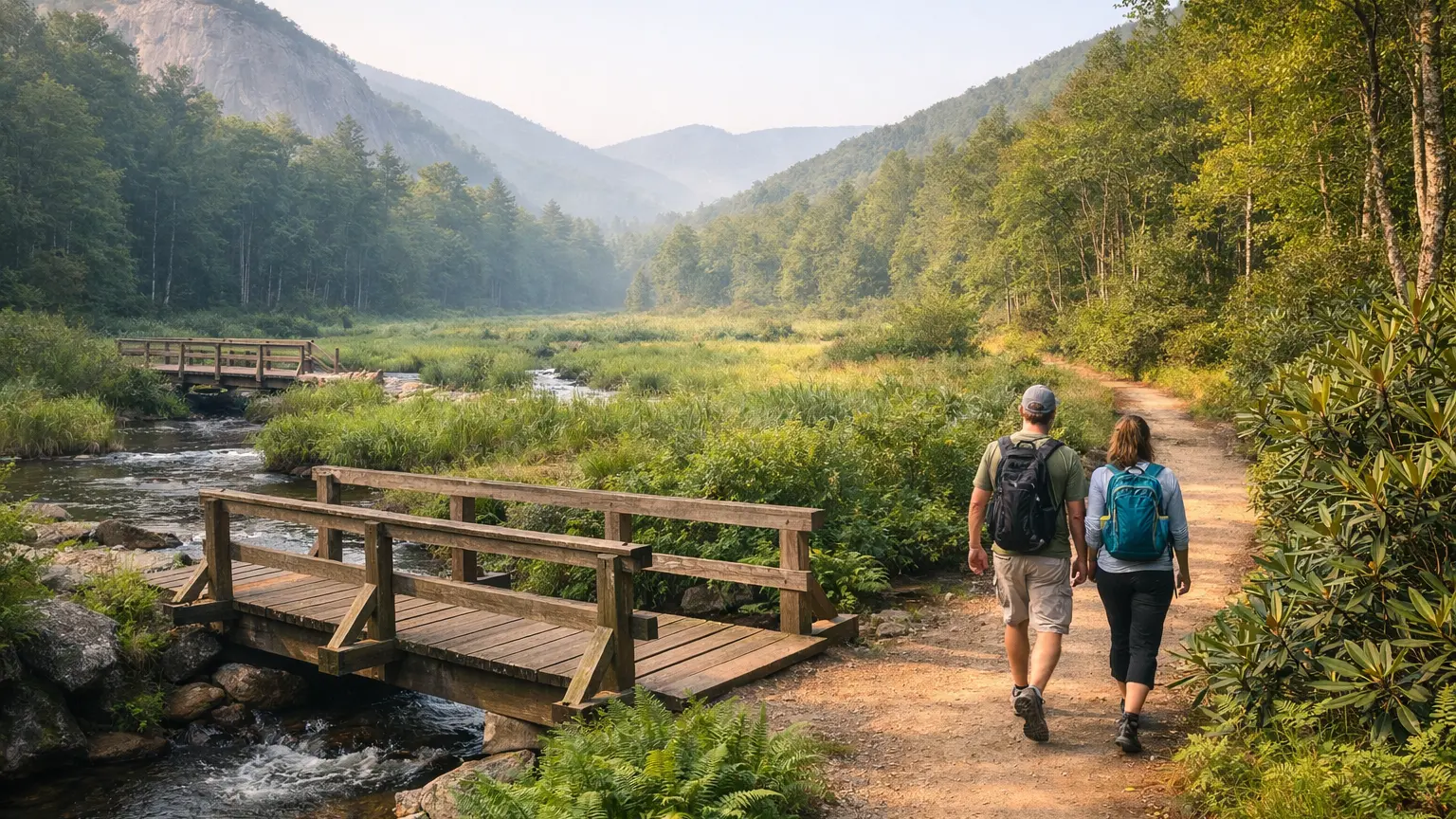
This easy 5.0-mile loop through a wetland valley, with about 100 feet of elevation change and several stream bridges, is arguably the best wildflower trail on this list simply because of the terrain. Wet valley floor plus filtered light through still-thin canopy is exactly the combination that favors early spring bloom. It’s also flat enough that mud, not grade, is the main obstacle.
7. Toms Creek Falls Trail
A short, mostly flat, roughly 0.8-mile round trip near Marion to an approximately 80-foot waterfall in Pisgah National Forest. Easy grade and high spring flow make this a good option if you want waterfall payoff without committing to a longer hike or steep terrain.
8. Roaring Fork Falls
A short walk on an old forest road (published mileage varies) to a cascade of roughly 45 feet on Roaring Fork below Mount Mitchell, in Yancey County. This one is easy to underrate because it’s off the main Asheville hiking circuit, but spring runoff from Mitchell’s higher elevations feeds it directly, so flow here tends to be strong in this season.
How We Ranked These
Three criteria drove this list, and they’re worth naming so you can weigh them differently if your priorities don’t match ours. First, seasonal payoff: trails made this cut because spring conditions specifically improve them, whether that’s waterfall volume, wildflower density in wetland or understory terrain, or clear sightlines before leaf-out. Second, accessibility relative to current conditions: several strong trails in this region are sitting out post-storm repairs or road closures, so anything with an active closure was left off the primary list even if it would otherwise belong here. Third, effort-to-reward ratio for a spring outing specifically — a short walk with high water flow can outperform a long climb where the seasonal upside is marginal, and that’s reflected in how heavily easy and short trails feature here.
Parking and Trailhead Reality
The Graveyard Fields overlook lot fills early on weekends even outside of fall, and spring weekends with good weather are no exception — arrive early or expect to wait for a spot. Moore Cove Falls and Toms Creek Falls both have simple pullout-style access, which keeps them low-stress, but neither has much capacity, so a handful of cars can make a pullout feel full. Catawba Falls has seen changes to its access and open sections since storm damage, so checking current status before you commit to the full loop, rather than assuming the upper falls and Wildflower Trail are open, will save you a wasted drive.
Seasonal Notes
Spring at higher elevations around Asheville doesn’t behave like spring in town. Craggy Gardens and Craggy Pinnacle sit high enough that a warm afternoon at the trailhead parking area can still mean a cold, windy summit, and early-season snowmelt or lingering ice on shaded sections is possible well into what feels like a mild spring at lower elevations. Waterfall trails benefit from the season’s higher water volume, but that same volume means wet rock, stronger current at plunge pools, and less margin for error if you’re tempted to get close to the base of a falls like Graveyard Fields’ Upper Falls or Catawba’s lower falls. Wildflower timing varies by elevation and exposure, and there’s no way to guarantee a specific bloom on a specific date — the honest approach is to check current conditions and recent trip reports before you go if a particular bloom is the whole reason for the trip.
Access Notes
Mud season is the real name for this stretch of the calendar, and it affects flat, wet-valley trails like Pink Beds more than steep, rocky ones, somewhat counterintuitively — water sits and pools on gentle grades rather than running off. Boots with real tread and trekking poles for stream-adjacent trails are worth bringing even on trails rated easy. For anything post-storm, like Catawba Falls, confirm which sections are actually open rather than assuming the full loop is back to its original state. None of the trails on this list require a permit, but always check current conditions before you go, since seasonal road gates, storm repair work, and water levels can change access without much notice.
Frequently Asked Questions
When is waterfall flow best in spring near Asheville?
Snowmelt and higher spring rainfall generally push more water through trails like Graveyard Fields, Catawba Falls, Moore Cove Falls, and Toms Creek Falls than you’ll see later in summer, but exact timing depends on that year’s precipitation — check current conditions before you go if peak flow is the goal.
Are these trails muddy in spring?
Yes, and flat wetland trails like Pink Beds Loop can be just as muddy as steeper terrain, sometimes more so, since water pools rather than draining off a gentle grade. Trail shoes with real traction help more than trekking poles alone on these sections.
Is Catawba Falls fully open this spring?
The loop reopened after Hurricane Helene, but the upper viewing platform and the Wildflower Trail were still closed at last check. Confirm current status before planning a trip around the upper falls specifically.
Do I need a permit for any of these trails?
None of the trails listed here require a permit. Some sit within Pisgah National Forest and are subject to general forest rules, but no special permit is mentioned for any of these routes.
Which trail is best for wildflowers specifically?
Pink Beds Loop Trail’s wetland terrain and filtered light make it the strongest candidate on this list for early spring bloom, though exact timing varies by year and elevation.
For the full picture beyond this list, browse every verified trail near Asheville in the WNC Trails directory, where you can filter by difficulty, distance, and current conditions before you head out. Conditions change fast in spring, so it’s always worth checking current status the day before you go.
Related Pages
This guide is part of our best hikes near Asheville NC series, built only on officially verified trail data.