Trail status (checked September 2026) — conditions change; confirm with the managing agency before you go.
- The Catawba Falls loop reopened after Hurricane Helene, but the upper viewing platform and the Wildflower Trail were still closed for repairs. Source: U.S. Forest Service
- Chimney Rock State Park reopened on June 27, 2025 after Hurricane Helene with limited operating days and per-person admission. Source: Chimney Rock State Park
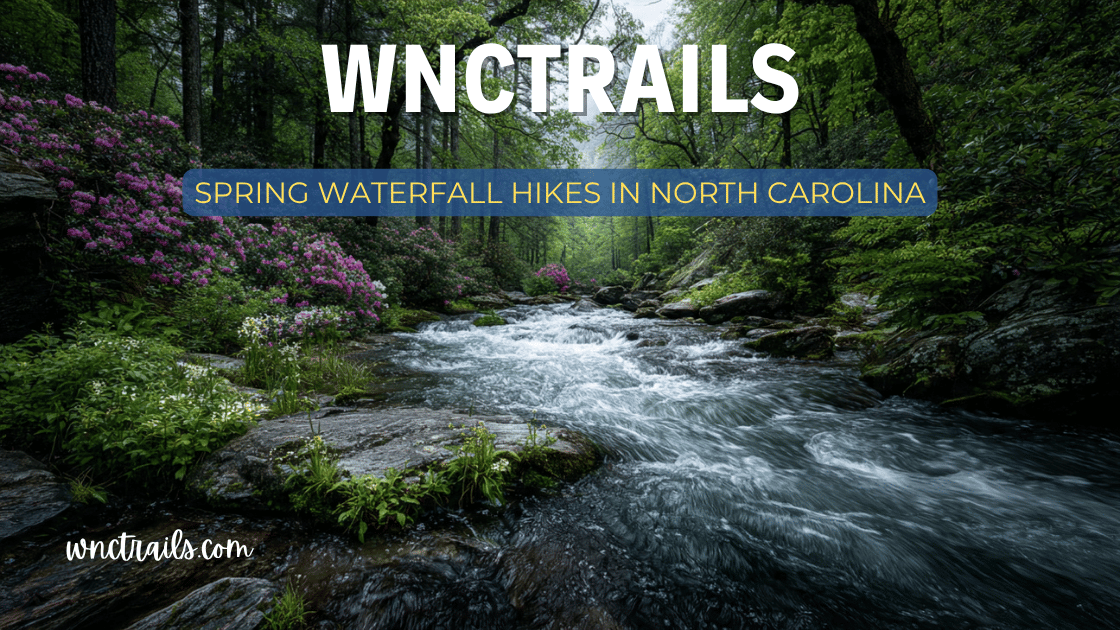
Spring is the best time to see North Carolina waterfalls at full volume. Snowmelt off the higher ridges and the season’s regular rain keep creeks running hard through April and May, before summer humidity and lower flow thin things out. The tricky part is picking the right hike for the day you actually have — some of these trails are a five-minute walk from a pullout, others involve real elevation and a few hundred stairs. This guide covers which trails reward a spring visit, how I ranked them, and what to actually expect at the trailhead.
Best Spring Waterfall Hikes in North Carolina
1. Looking Glass Falls
This is an accessible overlook right off US-276, no real hiking required, and the 60-foot drop is one of the most photographed waterfalls in the eastern US. In spring, the extra runoff turns this from a pretty postcard into a genuinely loud, full-volume waterfall — worth the stop even if you’ve seen it before.
2. Moore Cove Falls Trail
About 1.5 miles round trip, easy to moderate, ending at a 50-foot waterfall you can walk behind. Spring flow makes the walk-behind experience more dramatic (and wetter), and the trailhead pullout on US-276 north of Brevard is easy to find without a lot of backtracking.
3. Catawba Falls Trail (loop)
A 3.5-mile loop rated easy to intermediate, with a 205-foot lower falls and an 80-foot upper falls. The loop reopened after Hurricane Helene, but as of my last check the upper viewing platform and the Wildflower Trail were still closed — plan on the lower falls being the payoff here and confirm current status before you count on seeing the upper section.
4. Graveyard Fields Loop
Found at Blue Ridge Parkway milepost 418.8, the full loop with Upper Falls runs about 3.5 miles, easy to moderate, while Second Falls is just a short walk from the overlook. This mile-high valley is one of the better spring hikes for wildflowers alongside the water, but the overlook lot fills early on weekends — get there before mid-morning.
5. Dry Falls Trail
At just 0.11 miles, this is one of the shortest walks on this list, and it delivers a 75-foot waterfall in Cullasaja Gorge with stairs that let you walk behind the falls. Spring runoff through the gorge makes this a legitimately powerful waterfall despite the tiny footprint of the hike.
6. Glen Falls Trail
A 0.60-mile trail that passes three separate waterfalls, with the third featuring a family-friendly swimming hole. Spring is better for viewing the falls at strength than for swimming — the water’s still cold — but the layered falls make this a good pick if you want more than one waterfall for a short walk.
7. Whitewater Falls Trail
This trail accesses Upper Whitewater Falls, a 411-foot drop and the highest waterfall east of the Rockies. It’s a short trail relative to the payoff, and spring flow is when this waterfall looks its biggest — worth planning a trip around if you haven’t seen it.
8. Rainbow Falls Trail (Gorges State Park)
About 3 miles round trip from the Grassy Ridge access, rated moderate, leading to the 150-foot Rainbow Falls on the Horsepasture River. The first stretch is state park land and the falls themselves sit on National Forest land — the return climbs roughly 500 feet, so this is a real hike, not a stroll. If you have the legs for it, continue about a half mile beyond Rainbow Falls to Turtleback Falls, a smaller sliding cascade upstream that’s worth the extra distance in high spring flow.
9. Hickory Nut Falls Trail (Chimney Rock State Park)
A 1.5-mile round trip, easy, walking to the base of the 404-foot Hickory Nut Falls. The park reopened after Hurricane Helene, but operates with per-person admission and limited operating days — check before going, since this isn’t a walk-up-anytime trail like most others on this list.
10. Deep Creek Waterfalls Loop
A 2.4-mile loop, moderate, with steep sections, stairs, and roots, that strings together three waterfalls: Juney Whank Falls, Indian Creek Falls, and Tom Branch Falls. This is one of the better options if you want variety in a single hike — three distinct falls of different character on one loop, all running strong in spring.
How We Ranked These
I weighted three things when building this list: scenic payoff relative to effort, trail condition reports from the ranger districts and state parks, and how well each waterfall actually performs in spring compared to summer or fall. A few well-known falls got left off this particular list — not because they’re bad hikes, but because their spring flow doesn’t change the experience much, or because current closures make them a bad recommendation right now. I also gave extra weight to trails with confirmed open status post-Helene, since storm damage has closed or partially closed several waterfall trails across the region and I don’t want to send anyone to a trailhead that’s roped off.
Parking and Trailhead Reality
Looking Glass Falls and Graveyard Fields both sit directly off the Blue Ridge Parkway corridor, and both lots fill fast on spring weekends once the dogwoods and wildflowers start drawing crowds. Catawba Falls has a small gravel lot that fills by mid-morning on nice weekends. Dry Falls and Glen Falls, being so short, tend to have quick parking turnover even when the lots look full — people don’t linger long. Whitewater Falls and Rainbow Falls both involve more remote access roads; give yourself extra time getting there and don’t expect cell service to help if you take a wrong turn. Hickory Nut Falls requires paying admission at the park gate, so factor that into arrival timing since it’s not a pull-in-and-hike situation.
Seasonal Notes
Spring is genuinely the best season for waterfall volume in this region — snowmelt from higher elevations combines with regular spring rain to push more water over every one of these falls than you’ll see in a dry August. The tradeoff is trail conditions: creek crossings can run higher and faster, rock surfaces near the falls stay slick with spray, and a few trails still carry storm-damage advisories from Hurricane Helene that affect access to viewing platforms or side trails even where the main route is open. Early spring (before the leaf-out finishes) also gives you better long-range views on ridge hikes like Graveyard Fields, since the canopy hasn’t filled in yet. Always check current conditions before you go, especially after a heavy rain — high water can make stream crossings genuinely dangerous, not just inconvenient.
Access Notes
A few of these trails have specific access quirks worth knowing before you leave the house. Catawba Falls’ upper platform and the Wildflower Trail were closed at last check, so don’t plan your whole trip around seeing the upper falls. Hickory Nut Falls requires paying park admission and operates on limited days, unlike most of the other trails on this list which are free, walk-up access on Forest Service or Parkway land. Rainbow Falls and Turtleback Falls cross between state park and National Forest jurisdiction on the same trail, which occasionally means different rules apply to different sections — stick to marked trail and posted signage. None of these trails require a permit for day hiking, but always confirm current status directly with the managing agency (NC State Parks, the Blue Ridge Parkway, or the relevant Ranger District) before a long drive, since storm recovery work is still ongoing at several sites in this region.
Frequently Asked Questions
Which of these waterfall hikes is best for a first-time visitor?
Looking Glass Falls and Dry Falls are the two easiest wins — both require minimal walking and deliver a genuinely impressive waterfall, which makes them good picks if you’re short on time or hiking with people who don’t want a long trail.
Are these trails busy in spring?
Yes, especially on weekends once wildflowers and dogwoods bloom. Graveyard Fields and Looking Glass Falls see the heaviest traffic because both sit right on the Blue Ridge Parkway with easy pull-off access — arrive early if you want a parking spot.
Is spring water flow actually noticeably higher than other seasons?
Generally yes. Snowmelt and regular spring rainfall keep creek levels up across the region, which is why several of these waterfalls look more dramatic in April and May than they do in late summer, when flow can drop noticeably.
Can I still see Catawba Falls’ upper section?
At last check, the upper viewing platform and Wildflower Trail portion of the Catawba Falls loop were closed following Hurricane Helene, so the lower falls are the confirmed part of the hike right now — check current status before you go if the upper falls are the main draw for you.
Do any of these hikes require an entrance fee?
Hickory Nut Falls Trail, inside Chimney Rock State Park, requires per-person admission. The rest of the trails on this list are free access on Forest Service or Blue Ridge Parkway land, though parking availability isn’t guaranteed at any of them.
If you want to compare distance, difficulty, and current conditions across every verified waterfall trail in the region — not just the ones covered here — browse the full WNC Trails directory at /directory-category/trails-hiking/. Trail and road conditions change fast after storms in this region, so always check current conditions before you head out.
Related Pages
This guide is part of our best waterfall hikes in North Carolina series, built only on officially verified trail data.