Trail status (checked September 2026) — conditions change; confirm with the managing agency before you go.
- Linville Falls overlook trails are open, but the trail down to the river, the visitor center and the campground were still closed after Hurricane Helene, and portions of the Linville Gorge Trail remained closed. Source: National Park Service / U.S. Forest Service
Not every Blue Ridge Parkway pull-off leads to an easy stroll. Scattered along the ridgeline are trails that demand real effort — steep grades, long mileage, loose rock, or a gorge that doesn’t care how tired your legs are. If you’ve already done the paved overlooks and want something that makes you earn the view, this page is for you. We’ve pulled together the genuinely strenuous and moderate-to-strenuous hikes along the Parkway corridor in Western North Carolina, based on trail descriptions and difficulty ratings we’ve verified firsthand or cross-checked against official sources. This isn’t a list of every trail near the Parkway — it’s specifically the ones that will test you, along with honest notes on what makes each one hard and whether that difficulty is worth it.
The Hardest Blue Ridge Parkway Hikes Worth Doing
1. Douglas Falls Trail — 8 miles round trip, Strenuous
This is the longest and most demanding hike on this list, and it’s not close. Eight miles round trip puts it well beyond a casual afternoon outing, and the trail passes through two virgin hemlock groves before reaching the 70-foot Douglas Creek Falls. The distance alone is what makes this strenuous rather than just moderate — there’s no shortcut, and you need to budget most of a day. The payoff is a waterfall that feels genuinely remote, plus old-growth hemlocks that are increasingly rare to walk through in this region. If you only have time for one all-day effort on the Parkway, this is the one that rewards the mileage with something you can’t get on a shorter trail.
2. Linville Gorge Trail — 1.4 miles round trip, Strenuous
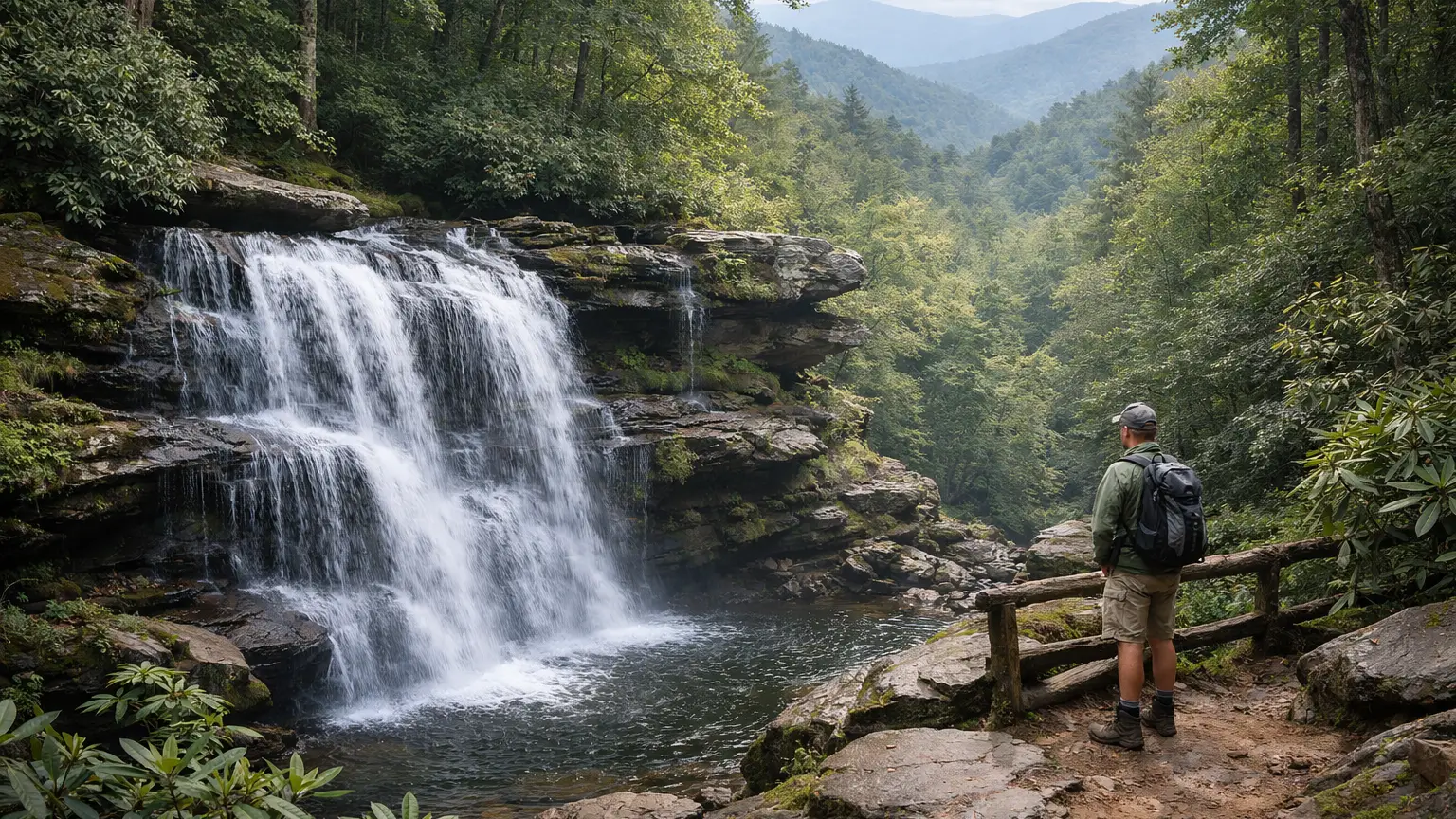
Don’t let the short distance fool you. This trail descends steeply from the Linville Falls area down into the gorge itself, ending at the base of the falls and a large pool. The strenuous rating here comes from grade, not length — you’re losing and then regaining a significant amount of elevation in under a mile and a half, on a trail that can be uneven and rocky underfoot. It’s a good option if you want a hard hike but don’t have a full day, though your knees will know the difference between this and a flat mile and a half somewhere else. The reward is standing at the base of one of the more photographed waterfalls on the Parkway, from an angle most visitors never see because they stop at the overlooks above.
3. Cedar Ridge Trail — 4.4 miles, Strenuous, Doughton Park
This one is a workout in the other direction — you descend a wooded ridge with more than 2,000 feet of elevation change, which means the climb back out is the real test. It’s easy to underestimate a trail that starts by going downhill, and Cedar Ridge is a good example of why that instinct is dangerous. Plan for the return trip to take noticeably longer and hit harder than the descent. This is a solid pick if you want a genuinely quiet, wooded strenuous hike without the crowds that gather at the waterfall-adjacent trails, and Doughton Park in general sees lighter foot traffic than the more famous stops further north.
4. Erwins View Trail — 1.6 miles round trip, Moderate to Strenuous, Linville Falls
Erwins View strings together four overlooks on the way to a panoramic view of Linville Gorge, and the terrain shifts enough along the way that it earns its moderate-to-strenuous label rather than sitting comfortably in the easy category. It’s shorter than Cedar Ridge or Douglas Falls, which makes it a more realistic choice if you want a hard-ish hike without committing half a day, but it’s still steep and rocky enough in sections that you shouldn’t treat it as a warm-up walk. The gorge view at the end is one of the better payoffs on the Parkway for the mileage invested.
5. Mount Pisgah Trail — 1.3 miles, Moderate to Strenuous
The first half of this trail is manageable; the second half is where it turns into a legitimate climb, with a steep, rocky stretch leading to the summit. What makes Mount Pisgah worth the effort is the payoff at the top — a summit view over the French Broad River valley that’s genuinely one of the better vistas accessible from a relatively short trail. Because the difficulty is concentrated in the back half, this is a good option if you want to test your legs without signing up for an all-day commitment, but don’t assume the short overall distance means it’s easy the whole way.
6. Boone Fork Trail — 5.5 miles, Moderate to Strenuous, Julian Price Park
This loop covers a lot of varied terrain — clear streams, open pastures, and large rock outcrops — which makes it feel less like a straight grind and more like a hike with real variety in what’s demanding about it. Some sections are rocky and require careful footing, especially near the stream crossings, and the overall length adds up over the course of the loop. It’s a good middle-ground pick if Douglas Falls sounds like too much but you still want a half-day hike with real elevation and terrain changes rather than a flat out-and-back.
How We Ranked These
We weighted four things when putting this list together, and none of them are just vibes.
Stated difficulty rating. We only included trails officially described as strenuous or moderate-to-strenuous — we didn’t stretch a moderate trail into this list just to pad it out.
Elevation change relative to distance. A short trail with a brutal descent-and-climb, like Linville Gorge Trail, can be just as hard as a long trail on gentler grades, like Douglas Falls. We tried to explain what’s actually making each one hard rather than just repeating a label.
Terrain and footing. Rocky, uneven, or loose sections change how a hike feels even at the same mileage, and we called that out where the trail description supports it.
Scenic payoff relative to the effort. A hard hike with a mediocre view isn’t worth recommending. Every trail on this list ends at something — a waterfall, a gorge floor, a summit — that justifies the climb.
Parking and Trailhead Reality
Linville Falls and Doughton Park both see heavy visitation during peak weekends, particularly in fall, and trailhead lots for Erwins View and Linville Gorge Trail can fill before midday. If you’re planning either of the Linville Falls hikes, arriving earlier rather than later gives you a much better shot at parking without a long walk-in from an overflow area. Douglas Falls and Cedar Ridge see noticeably less traffic simply because they demand more from hikers, which tends to be self-selecting — fewer people commit to an 8-mile round trip or a 2,000-foot elevation swing on a whim. Mount Pisgah’s trailhead is near a developed area of the Parkway and can get busy on clear-weather weekends, since the short overall distance draws hikers who might not otherwise attempt something in the moderate-to-strenuous range. As always, check current conditions and any posted parking or access advisories before you go, since availability shifts throughout the year.
Seasonal Notes
These harder trails come with their own seasonal considerations beyond the usual leaf-season crowding. Elevation-heavy trails like Cedar Ridge and Mount Pisgah can hold ice and mud well into spring on shaded, north-facing sections, which changes a strenuous hike into something genuinely risky if you’re not prepared for slick footing. Waterfall-adjacent trails like Linville Gorge Trail and Douglas Falls Trail can have slick rock near the water regardless of season, so footwear matters more here than trail difficulty alone would suggest. Fall brings the heaviest crowds to the Linville Falls trails in particular, which can make an already-steep trail feel more congested at pinch points. The Parkway itself is subject to seasonal and weather-related closures in various sections, so it’s worth checking current conditions on both the trail and the access road before committing to a longer hike like Douglas Falls, where a closure would mean backtracking a significant distance.
What to Bring
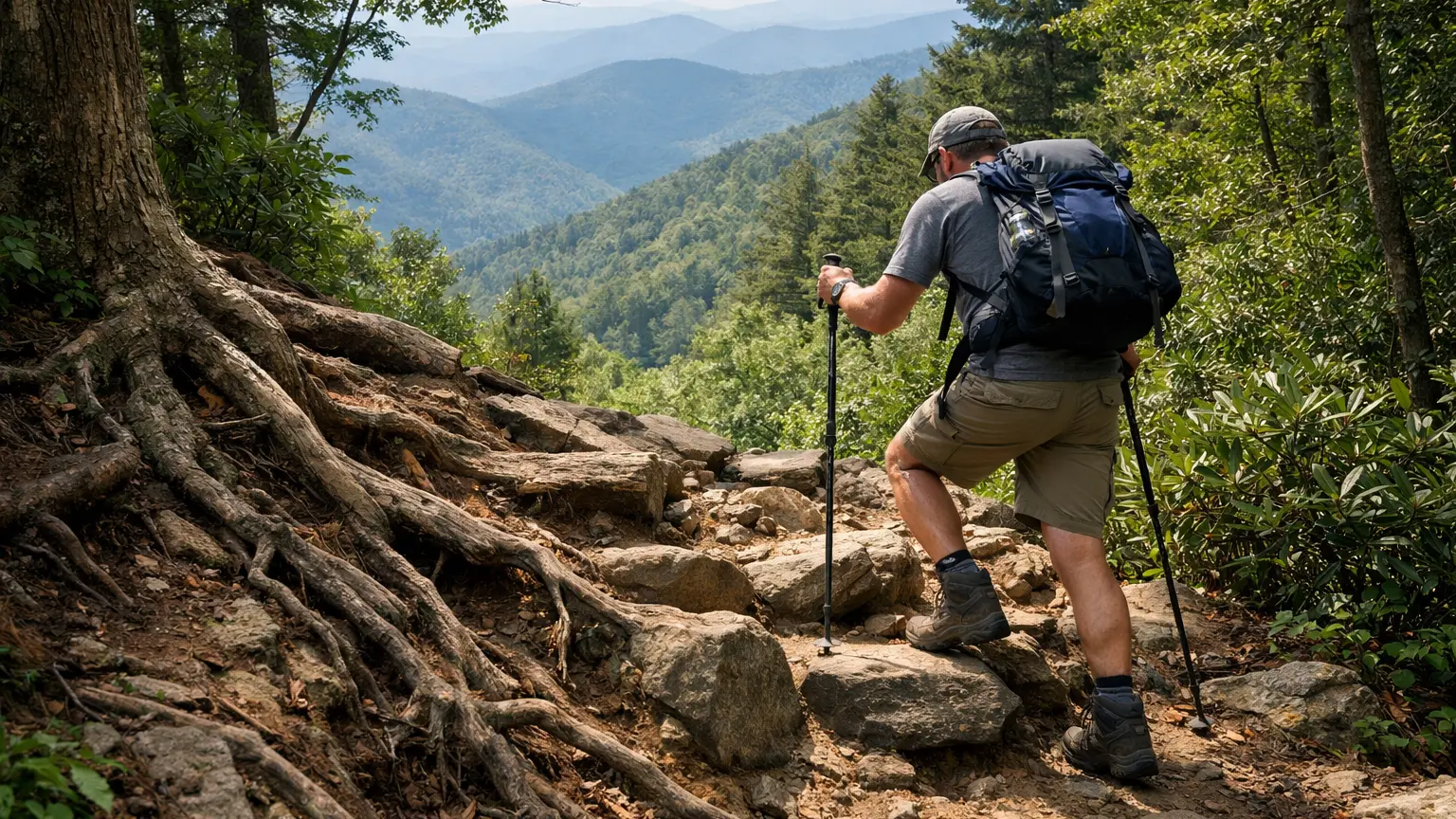
For any of the strenuous options on this list, trekking poles are worth the extra weight in your pack — they make a real difference on the steep descents at Linville Gorge Trail and Cedar Ridge, and on the loose rock near the summit push on Mount Pisgah. Bring more water than you think you’ll need, especially for Douglas Falls given the round-trip mileage, since there’s no reliable resupply along the way. Footwear with real ankle support and grip matters more on these trails than on the easier Parkway walks, since loose rock and uneven footing show up repeatedly across this list. Cell service is inconsistent to nonexistent in the gorge sections and deeper into Doughton Park, so let someone know your plan if you’re tackling the longer routes solo.
Frequently Asked Questions
Which is the hardest hike on the Blue Ridge Parkway from this list?
Douglas Falls Trail is the most demanding overall due to its 8-mile round-trip distance, though Linville Gorge Trail and Cedar Ridge Trail are harder per mile because of steep elevation change over shorter distances.
Are any of these hikes good for a half-day trip?
Erwins View Trail, Linville Gorge Trail, and Mount Pisgah Trail are all short enough to fit into a half day while still delivering genuine difficulty and a strong scenic payoff.
Do these trails require a permit?
The verified trail data for these hikes doesn’t indicate a permit requirement, but you should confirm current rules and any posted advisories before heading out, since access conditions can change.
Is Boone Fork Trail actually strenuous the whole way?
No — it’s rated moderate to strenuous, meaning some sections, particularly stream crossings and rocky outcrop areas, are more demanding than others, but it’s not a continuous hard climb like Cedar Ridge.
Which hike has the best payoff for the effort?
That’s subjective, but Linville Gorge Trail delivers an outsized reward for its short distance — a waterfall base view most visitors never reach — while Douglas Falls rewards a full day of hiking with genuine solitude and old-growth hemlocks.
If you want to compare these hikes against every other trail we’ve verified near the Blue Ridge Parkway — filtered by difficulty, distance, or current conditions — browse the full WNC Trails directory at WNC Trails directory. As always, check current conditions before you head out, since access roads, water levels, and trail surfaces can change with the season.
Related Pages
- Long Blue Ridge Parkway Hikes
- Family Friendly Blue Ridge Parkway Hikes
Want more routes in this area? See our complete guide to Blue Ridge Parkway hikes.