Trail status (checked September 2026) — conditions change; confirm with the managing agency before you go.
- The Catawba Falls loop reopened after Hurricane Helene, but the upper viewing platform and the Wildflower Trail were still closed for repairs. Source: U.S. Forest Service
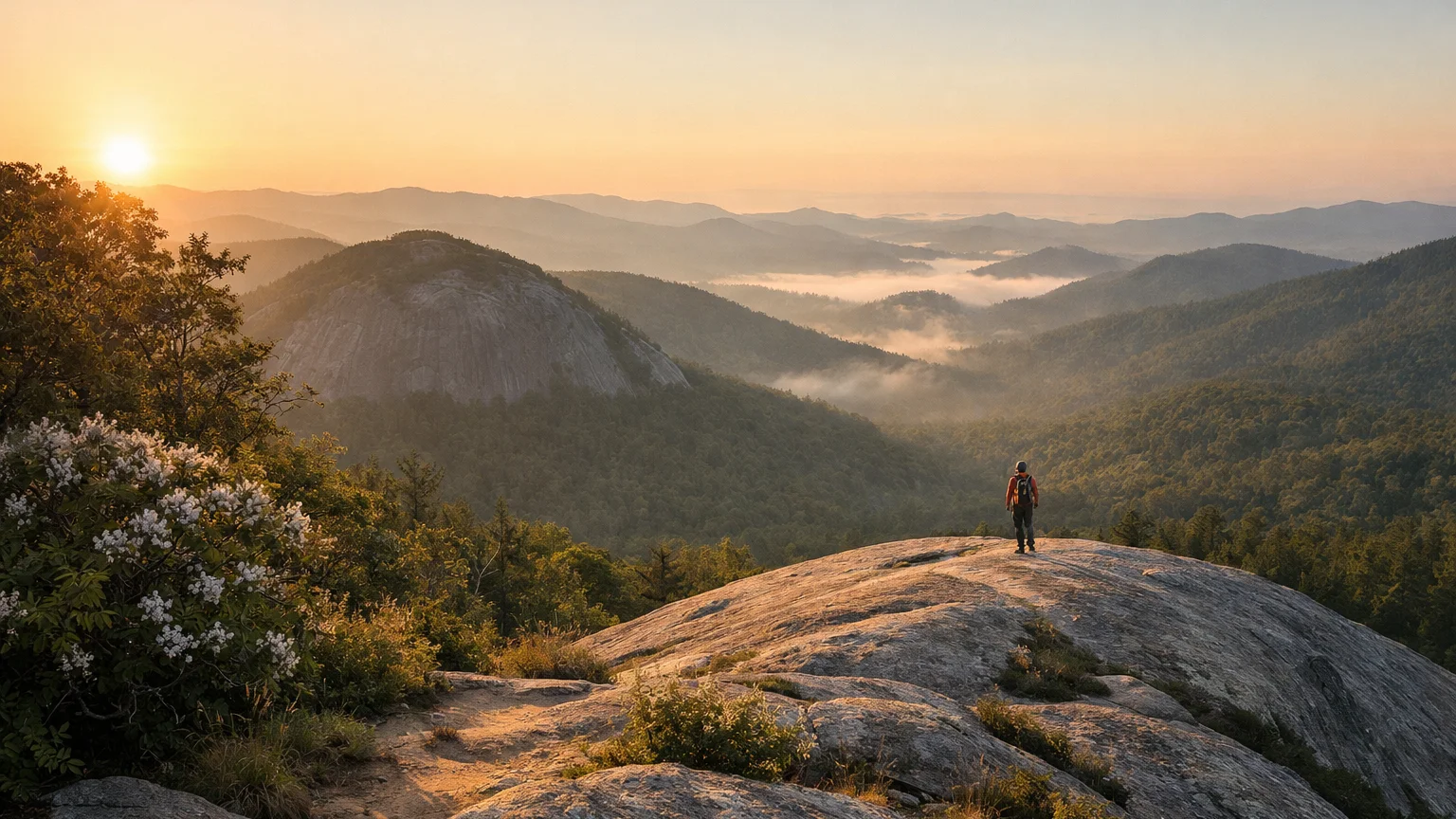
Not every trail in Pisgah National Forest rewards an early start, and that’s the first thing worth knowing before you set an alarm for 5 a.m. A sunrise hike only pays off if the trail actually delivers an open view to the east — a waterfall in a shaded gorge won’t do it, no matter how photogenic it is at noon. This page focuses specifically on the trails in our verified Pisgah cluster that have real elevation, exposed rock, or a summit view, because those are the ones where watching the sky change color is actually the point. We’ll walk through which trails fit, why we ranked them the way we did, and the practical stuff — parking, seasonal timing, and what to bring — that determines whether your sunrise hike is a good memory or a cold, muddy mistake.
Best Sunrise Hikes in Pisgah National Forest
1. Mount Pisgah Trail
1.3 miles, moderate, about 700 feet of elevation change. This is the most straightforward sunrise pick in the whole cluster. It’s short enough to knock out before work if you’re motivated, and the 360-degree summit view means you’re not gambling on which direction the color show happens — you’ll see it from wherever it breaks. The elevation gain is real for a mile-plus trail, so it’s not a stroll, but it’s manageable in the dark with a headlamp if you know the tread.
2. Looking Glass Rock Trail
3.1 miles, moderate, about 1,700 feet of elevation change. This is a bigger commitment than Mount Pisgah — you’ll need to start well before dawn to summit in time — but the panoramic view from the top is one of the more dramatic payoffs in this forest. The elevation change is steady rather than brutal, but budget real time for it, especially with a headlamp on unfamiliar switchbacks.
3. John Rock Trail
1.8 miles, moderate, about 750 feet of elevation change. The granite dome at the top looks out over the fish hatchery, Looking Glass Rock, and Pilot Mountain, which makes for a layered view as the light comes up — foreground, midground, and distant ridgeline all lit at once. Shorter than Looking Glass Rock Trail but with a comparable elevation punch per mile, so don’t underestimate it just because the mileage looks modest.
4. Art Loeb Spur Trail
0.6 miles, strenuous, about 200 feet of elevation change. Don’t let the short distance fool you — this is a steep, quick burst to a panoramic view that can stretch up to 70 miles on a clear morning. If you’re short on time but want serious payoff, this is the highest view-per-minute trail on this list. It’s often paired with a longer approach via the Art Loeb corridor, so factor that in.
5. Cold Mountain Trail
1.4 miles, strenuous, about 900 feet of elevation change. Steep and short, ending in exposed rock summit views that are genuinely worth the burn in your legs. Because the trail is strenuous relative to its length, this one rewards hikers who are already comfortable moving fast on uneven terrain in low light.
6. Old Butt Knob Trail
3.6 miles, strenuous, about 2,500 feet of elevation change. This is the toughest trail on this list by a wide margin, and it’s not a casual pre-work sunrise hike — it’s for hikers who want to make a real morning of it. The payoff is a string of views across several knobs overlooking the Shining Rock Wilderness, which means multiple vantage points instead of just one summit moment.
7. Ivestor Gap Trail
3.7 miles, easy, about 130 feet of elevation change. If you want sunrise views without steep climbing, this is the outlier on the list — an easy grade that still delivers open views of the Shining Rock Wilderness from high balds. It’s a good option for hikers who want the reward without the strenuous approach, though the extra mileage means an earlier start to reach the balds before first light.
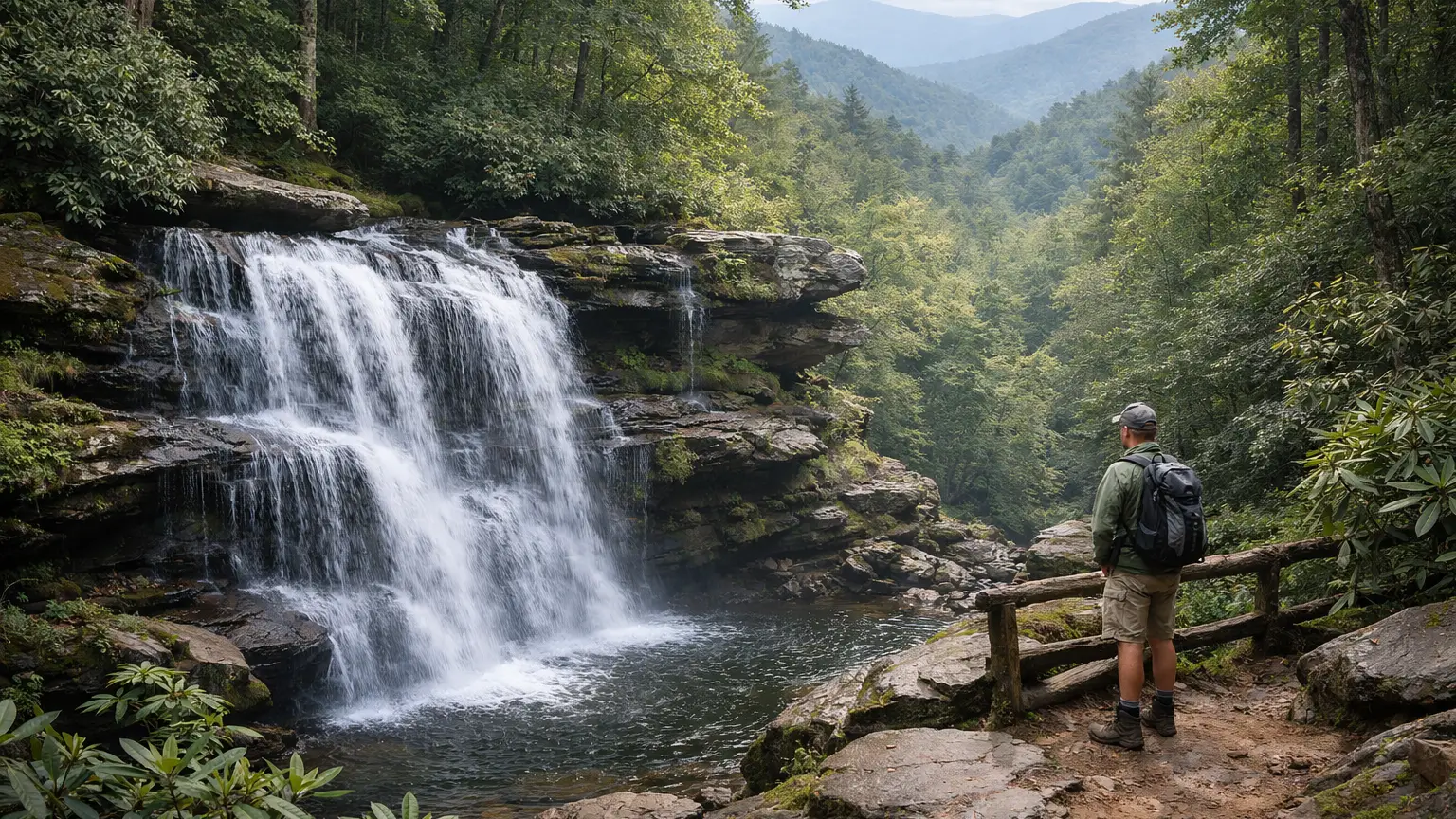
Worth noting: we left waterfall trails like Looking Glass Falls, Catawba Falls, and Slick Rock Falls off this list on purpose. They’re excellent hikes, but their features sit in shaded, enclosed terrain where sunrise light doesn’t really register the way it does on an open summit or bald. If waterfalls are your priority, that’s a different page — this one is about sky and elevation.
How We Ranked These
We weighed three things when building this list. First, exposure — does the trail actually end somewhere with an open eastern view, or are you standing in tree cover when the sun comes up? Second, time-to-payoff — how much elevation and distance stands between a pre-dawn start and the summit, since that determines whether a trail is realistic for a quick sunrise trip versus a bigger morning commitment. Third, terrain difficulty in low light — a strenuous trail with loose rock or steep switchbacks is a different proposition at 5:30 a.m. with a headlamp than it is at noon, so we factored in how forgiving or unforgiving each trail’s tread is likely to be in the dark.
Parking and Trailhead Reality
Pisgah’s popular trailheads fill up fast, and sunrise hikers actually have an advantage here — arriving before dawn usually means you’re parked before the day-hiker crowd shows up. That said, some of these trailheads sit off gravel forest roads that are harder to navigate in the dark, so give yourself extra buffer time on your drive, especially if you haven’t driven the access road before. Trails accessed from busier corridors, like Looking Glass Rock and Mount Pisgah, tend to see backed-up parking by mid-morning on weekends, which is one more reason the early start works in your favor. Always check current conditions before you go, since road and lot access can shift seasonally.
Seasonal Notes
Sunrise timing shifts a lot across the year in Pisgah, and so does trail difficulty. Winter mornings mean icy sections on anything with real elevation change — Cold Mountain, Old Butt Knob, and Looking Glass Rock all have enough gain that frozen or wet rock near the summit is a real hazard, not a theoretical one. Fall brings leaf-season crowds to the more accessible summits like Mount Pisgah, so an early arrival matters even more during that stretch. Spring and early summer tend to offer the most reliable footing and daylight balance for these hikes, though afternoon storms are common in this forest, which isn’t a sunrise concern but is worth knowing if your hike runs long. Whatever season, check current conditions before heading out, since gate closures and road conditions can change with weather.
What to Bring
A reliable headlamp is non-negotiable for any of these — you’ll be hiking at least part of the trail in the dark, and even short trails like Art Loeb Spur have enough steep, uneven footing that you don’t want to be guessing where the trail goes. Bring layers; summit temperatures at sunrise run noticeably colder than the trailhead, especially on exposed rock like Cold Mountain or the John Rock dome. Traction devices are worth carrying in colder months given the elevation change on trails like Looking Glass Rock and Old Butt Knob. If you’re heading toward the Art Loeb corridor or planning a longer loop that touches backcountry sections, note that camping in the wider Art Loeb and Black Mountain Trail areas requires awareness of shelter and spring locations — check current forest service guidance if you’re extending a sunrise hike into an overnight trip.
Frequently Asked Questions
Which trail is easiest for a first sunrise hike in Pisgah?
Mount Pisgah Trail is the most approachable option here — 1.3 miles with a 360-degree summit view means you don’t have to guess which direction to face when the light comes up.
Can I do a sunrise hike without steep elevation gain?
Ivestor Gap Trail is the easiest-graded option on this list, with about 130 feet of elevation change over 3.7 miles, though you’ll need extra time given the added distance.
How early should I arrive for a sunrise hike?
It depends on the trail’s length and elevation change — a short, steep trail like Art Loeb Spur needs less lead time than a longer approach like Looking Glass Rock Trail or Old Butt Knob Trail. Plan your start time around your specific trail’s mileage and gain, not a flat rule.
Are these trails safe to hike in the dark?
They’re hikeable with a good headlamp and some caution, but steep, rocky sections — especially on Cold Mountain, Looking Glass Rock, and Old Butt Knob — deserve extra care in low light. If you’re new to a trail, consider a trial daytime hike first so you know the terrain.
Do any of these trails require a permit?
Not directly for sunrise day hikes, but if you’re extending into backcountry camping near the Art Loeb or Black Mountain Trail corridors, or into Linville Gorge, permit rules apply on weekends and holidays from May through October. Check current requirements before planning an overnight add-on.
If none of these fit your schedule or fitness level exactly, browse the full list of verified trails near Pisgah in the WNC Trails directory, where you can filter by difficulty, distance, and current conditions before you head out: WNC Trails directory. As always, conditions in this forest shift with weather and season, so double-check road access and trail status before your alarm goes off.
Related Pages
- Sunset Hikes In Pisgah National Forest
- Summer Hikes In Pisgah National Forest
Want more routes in this area? See our complete guide to Pisgah National Forest hikes.