Trail status (checked September 2026) — conditions change; confirm with the managing agency before you go.
- Mount Mitchell State Park is open but reachable only from the Asheville side of the Blue Ridge Parkway while Helene repairs continue north of the park. A section of the Old Mitchell Trail (park office to the Camp Alice Trail junction) and several connecting Pisgah National Forest trails were still closed. Source: NC State Parks
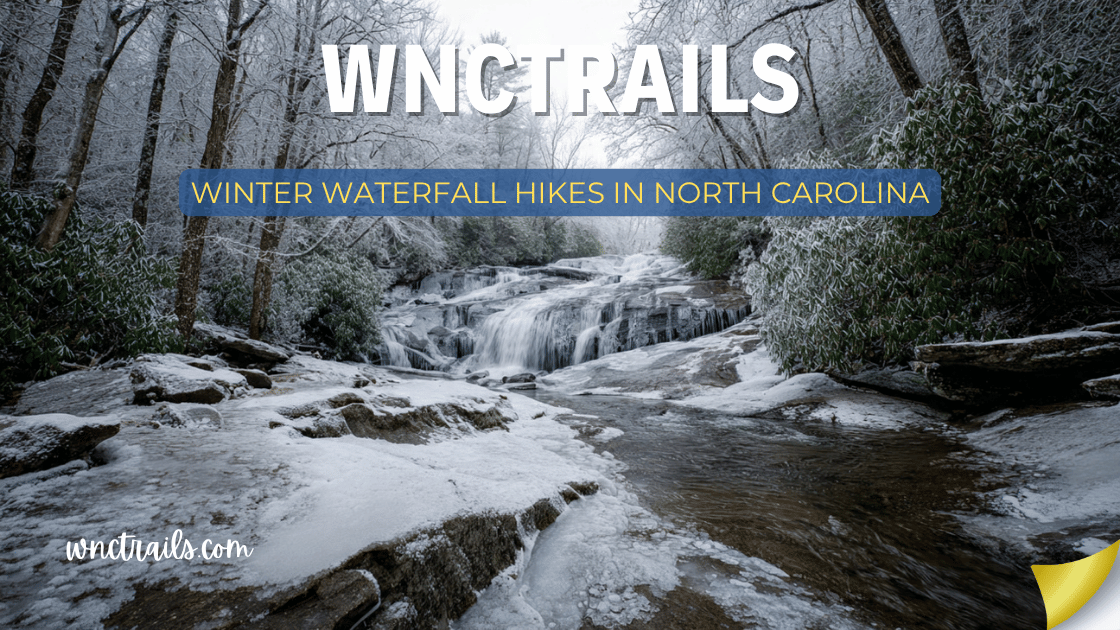
Winter is an underrated season for waterfall hiking in Western North Carolina. The leaves are down, so you can actually see the falls from farther away instead of guessing at a roar through the rhododendron. Cold-season rain and snowmelt also push more water over the rock, which means some of these falls look better in January than they do in July. The trade-off is ice, shorter daylight, and a few roads and gates that close for the season. This page sticks to waterfall trails that are short enough, low-elevation enough, or exposed enough to still make sense when the temperature drops — not the ones that turn into a liability on a frozen staircase.
Winter-Friendly Waterfall Trails in WNC
1. Looking Glass Falls
This is the easiest waterfall in the region to see in any season, and winter is arguably its best time. The 60-foot drop is visible right from an overlook off US-276, so there’s no trail commitment, no ice-covered steps, and no risk of losing daylight halfway through a hike. If you only have twenty minutes and want a guaranteed payoff, this is it.
2. Moore Cove Falls Trail
About 1.5 miles round trip, easy to moderate. The trailhead is a simple pullout on US-276 north of Brevard, and the walk leads to a 50-foot waterfall you can actually walk behind. In winter, the reduced tree cover opens up the view well before you reach the falls, and the shorter distance means you’re not exposed to dropping temperatures for long.
3. Toms Creek Falls Trail (near Marion)
Roughly 0.8 miles round trip, easy, and mostly flat. This is one of the least demanding waterfall walks in Pisgah National Forest, which matters in winter when footing is less predictable. The roughly 80-foot waterfall is a solid reward for very little elevation change.
4. Hooker Falls Trail
A 0.4-mile, foot-traffic-only trail in DuPont State Recreational Forest. Short, low-grade, and easy to combine with Triple Falls below since both trailheads sit close together. Good pick when you want a waterfall fix without much time commitment or elevation exposure.
5. Triple Falls Trail
Also 0.4 miles, foot traffic only, and right in the same DuPont cluster as Hooker Falls. Pairing these two into one outing gives you two distinct waterfalls for less total walking than most single-waterfall hikes elsewhere in the region.
6. Roaring Fork Falls (Yancey County)
A short walk on an old forest road below Mount Mitchell, reaching a cascade of roughly 45 feet on Roaring Fork. Published mileage varies depending on the source, so treat this as a short, easy outing rather than counting on a specific number. The forest road access means less rock-hopping and fewer uneven roots than some of the steeper trails on this list.
7. Dry Falls Trail
Just 0.11 miles, but it includes stairs, and those stairs can ice over in cold weather — worth noting since the whole appeal here is walking behind the 75-foot waterfall in Cullasaja Gorge. Check current conditions before you go, especially after a freeze, since the mist off the falls can coat the steps.
8. Cascades Trail (E.B. Jeffress Park)
A 0.5-mile, moderate, self-guiding loop off the Blue Ridge Parkway. This one comes with a real caveat in winter: Parkway sections above a certain elevation are prone to seasonal closures, so this trail is only workable when that stretch of the Parkway is open. Call ahead or check current Parkway status before planning around it.
How We Ranked These
Three things mattered most for a winter-specific list: total trail length, exposure to ice-prone features like stairs or stream crossings, and whether the access road stays open through the cold months. Trails with long approach distances, multiple stair sections, or steep drop-offs got left off this list even when the waterfall itself is impressive, because a slick 300-step descent is a different hike in January than it is in June. We also weighted trailheads with roadside or near-roadside access higher, since shorter daylight hours in winter reward hikes where you’re not racing the sunset on the way back to the car. Scenic payoff still counts — Looking Glass Falls and Dry Falls both earn a spot because the reward per minute of effort is unusually high.
Parking and Trailhead Reality
Most of these winter picks are low-traffic pullouts rather than large lots, which is actually good news this time of year — the crowd pressure that hits places like Graveyard Fields or Sliding Rock in summer and fall largely disappears in winter. Looking Glass Falls and Moore Cove Falls both use pullouts directly on US-276, and those roads generally stay passable, though a hard freeze can still make the shoulder icy. DuPont’s Hooker Falls and Triple Falls trailheads see more consistent traffic year-round since they’re popular with local dog walkers and trail runners, but winter mornings are still noticeably quieter than a fall Saturday. If your route depends on a Forest Service road or a Parkway section, don’t assume it’s open just because it was last month — winter gate closures follow weather, not a fixed calendar.
Weather and Conditions
The single biggest variable for winter waterfall hikes here isn’t the waterfall — it’s the trail surface leading to it. Stairs, footbridges, and rock steps that are perfectly fine in dry weather can carry a thin, nearly invisible layer of ice after a freeze-thaw cycle, and that’s exactly the kind of feature you’ll find at Dry Falls and similar short, stepped trails. Higher-elevation routes tied to the Blue Ridge Parkway carry the added risk of the road itself closing for snow or ice, which is why the Cascades Trail entry above comes with a direct caveat. On the upside, winter and early spring rain genuinely increases water volume at most of these falls, so the visual payoff at Looking Glass Falls or Toms Creek Falls can be noticeably better than a dry summer visit. Check current conditions before you go — both for the trail surface and for road access.
What to Bring
Traction matters more than mileage on this list. Even a short 0.4-mile trail like Hooker Falls or Triple Falls can have icy patches near the water where spray settles on rock, so trail spikes or at minimum boots with real tread are worth carrying even if the forecast looks mild. Daylight is shorter, so start earlier than you think you need to, particularly for anything involving a Forest Service road where you don’t want to be navigating gravel in the dark. Layers matter more here than at most WNC hikes because you’ll be standing still near cold, moving water for photos — that’s when the chill actually sets in. None of these require a permit, but always confirm current status for any trail tied to a gate, seasonal road, or park operating schedule before you drive out.
Frequently Asked Questions
Are waterfalls better to visit in winter?
Often, yes. Cold-season rain and snowmelt tend to increase water volume, and leafless trees open up views that are blocked by foliage most of the year. Looking Glass Falls and Toms Creek Falls are good examples where winter flow is a genuine upgrade over a dry summer visit.
Do any of these trails close in winter?
Trails tied to the Blue Ridge Parkway, like the Cascades Trail at E.B. Jeffress Park, are the ones most likely to be affected, since sections of the Parkway close seasonally for snow and ice. The forest-road pullouts and DuPont trailheads on this list are generally more reliable, but you should still check current conditions before heading out.
Which of these hikes is the easiest for a winter day trip?
Looking Glass Falls requires almost no walking at all, making it the lowest-effort option on this list. Toms Creek Falls and the DuPont pair of Hooker Falls and Triple Falls are close behind, all under a mile round trip with minimal elevation change.
Is ice a real concern on short trails like Dry Falls?
Yes — length isn’t the same as risk here. Dry Falls is only about 0.11 miles, but the trail includes stairs near the waterfall’s spray zone, which can ice over even when the surrounding area looks dry. Treat short, stepped trails with the same caution as longer ones in freezing weather.
Should I avoid steep, high-step trails like Mingo Falls in winter?
It’s not on this winter list for exactly that reason — the roughly 160 steep steps to Mingo Falls are a much bigger liability when icy than they are in warm weather. If you want to attempt it in winter anyway, check conditions closely and expect a slower, more cautious pace than you’d plan for in summer.
Every one of these trails is listed with current, verified details in the WNC Trails directory, where you can filter every waterfall hike in the region by difficulty, distance, and reported conditions before you commit to a drive. As always, conditions shift fast in winter — check current conditions before you go, and browse the full list at /directory-category/trails-hiking/.
Related Pages
This guide is part of our best waterfall hikes in North Carolina series, built only on officially verified trail data.