Trail status (checked September 2026) — conditions change; confirm with the managing agency before you go.
- Crabtree Falls (Blue Ridge Parkway, MP 339.5) is closed and inaccessible due to Hurricane Helene damage, and Crabtree Falls Campground is closed for 2026. Source: National Park Service
- Mount Mitchell State Park is open but reachable only from the Asheville side of the Blue Ridge Parkway while Helene repairs continue north of the park. A section of the Old Mitchell Trail (park office to the Camp Alice Trail junction) and several connecting Pisgah National Forest trails were still closed. Source: NC State Parks
- The Catawba Falls loop reopened after Hurricane Helene, but the upper viewing platform and the Wildflower Trail were still closed for repairs. Source: U.S. Forest Service
- Setrock Creek Falls remains closed due to Hurricane Helene damage to the Black Mountain Campground area. Source: U.S. Forest Service
- Chimney Rock State Park reopened on June 27, 2025 after Hurricane Helene with limited operating days and per-person admission. Source: Chimney Rock State Park
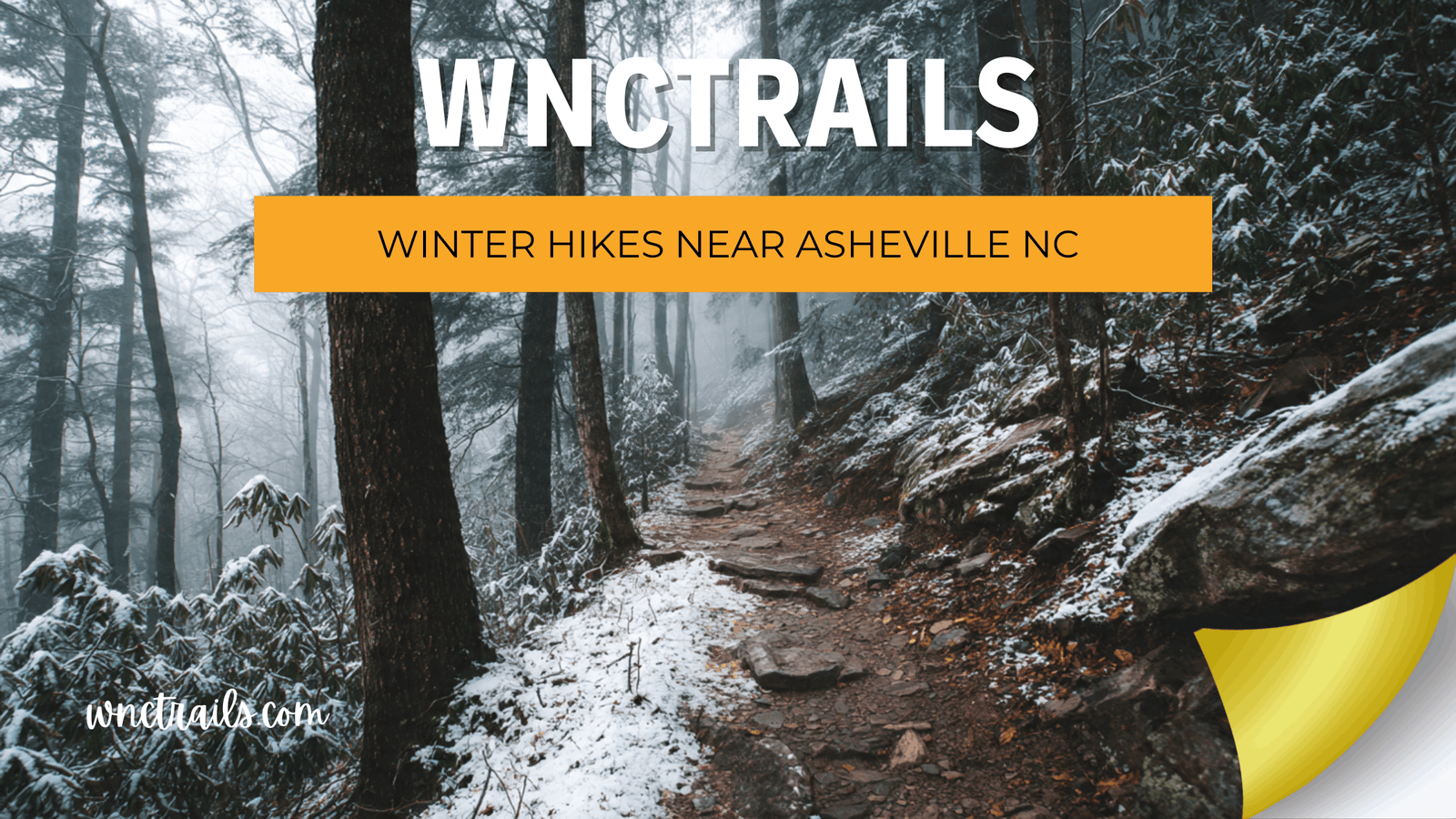
Winter changes the math on hiking near Asheville more than any other season. It’s not just cold — it’s that a big chunk of the trails everyone recommends in October sit on or near sections of the Blue Ridge Parkway that close seasonally with little advance notice, and the ones that stay open can hide ice in places you’d never expect it in July. This page isn’t a generic “best hikes” list. It’s specifically about which trails near Asheville are realistic to hike between roughly November and March, which ones depend on roads that may or may not be open the day you show up, and what to actually pack once the ground starts freezing overnight. If you’re trying to decide between a low-elevation waterfall walk and a high-elevation summit view this time of year, this is the decision this page is built to help with.
Winter-Friendly Trails Near Asheville: What Actually Holds Up
1. Catawba Falls Trail (3.5 mi loop, easy to intermediate)
This one sits at a lower elevation than most of the trails clustered along the Parkway, which matters a lot in winter — less snow accumulation, faster melt-off, and a road in that isn’t gated by seasonal closures. The loop reopened after Hurricane Helene, though the upper viewing platform and Wildflower Trail were still closed at last check, so plan on the lower falls as the main destination this time of year.
2. Toms Creek Falls Trail, near Marion (about 0.8 mi round trip, easy)
A short, mostly flat trail to an roughly 80-foot waterfall — this is about as low-commitment as winter hiking gets around here. Low elevation and short mileage mean less exposure to the wind and ice that make longer, higher hikes riskier once temperatures drop.
3. Roaring Fork Falls, Yancey County (short walk, easy)
Reached by a short walk on an old forest road off NC-80, about two miles north of the Parkway, this roughly 45-foot cascade is another low-elevation option that doesn’t depend on Parkway access being open. Good pick on a day when you want a payoff without a long approach.
4. Hooker Falls Trail and Triple Falls Trail, DuPont State Forest (0.4 mi each)
Both are short, foot-traffic-only trails to named waterfalls, and both sit at low elevation relative to the Pisgah high country. They’re an easy way to get a real waterfall view without betting on road conditions or ice on exposed rock summits.
5. Lake Tomahawk Park Walking Trail (0.55 mi loop, easy)
The most-used amenity at Lake Tomahawk Park, and for winter it’s a genuinely practical choice — it’s an in-town, maintained loop, which means it’s far more likely to be cleared or at least walkable after a light snow than a forest trail at elevation.
6. Lower Piney Trail, Montreat (a bit over a mile round trip, easy)
Described as suitable for hikers of all ages, this low-key Montreat trail is a solid winter option when you want to stay outdoors without committing to ice-prone terrain higher up the mountain.
7. Looking Glass Falls, off US-276
One of the most photographed waterfalls in the eastern US, and one of the easiest to reach in winter — it’s an accessible overlook right off the road, no real trail commitment required. On a short winter day this is a reliable way to see a genuinely impressive 60-foot drop without much walking.
How We Ranked These
Elevation and exposure. Trails that sit noticeably lower — Catawba Falls, Toms Creek Falls, Roaring Fork Falls, the DuPont waterfalls — hold less snow and ice than anything near the Parkway’s higher overlooks, so they made the top of this list.
Road access reliability. Trails reached without depending on a Parkway section that closes seasonally were prioritized over trails like Craggy Gardens, Mount Mitchell, or Graveyard Fields, where the access road itself is the biggest variable in winter, not the trail.
Distance and exposure time. Shorter trails mean less time exposed to wind and cold, and less chance of getting caught out as daylight fades — a real factor when winter days end well before 6pm.
Post-storm recovery status. Trails with known closures or damage from Hurricane Helene, like Crabtree Falls and Setrock Creek Falls, were excluded entirely rather than included with a caveat, since conditions on closed sections shouldn’t be treated as hikeable.
Parking and Trailhead Reality
Winter parking near Asheville trails is a mixed bag. Chimney Rock State Park, home to Hickory Nut Falls Trail, reopened after Hurricane Helene damage but operates with per-person admission and limited operating days — check current pricing and hours before you go, especially in winter when days may be reduced. DuPont State Forest’s trailheads for Hooker Falls and Triple Falls draw steady weekend traffic even in the off-season, so an early arrival still helps. Catawba Falls has a defined lot that can fill on clear weekends despite the season. Lake Tomahawk’s lot is small and in-town, which actually works in its favor in winter — it’s rarely the bottleneck that forest trailheads become. If your plan involves anything near the Parkway, don’t assume the access road is open; verify before you drive out, since closures can happen with little notice.
Weather and Conditions
Sections of the Blue Ridge Parkway close seasonally in winter, often with little advance notice, due to snow and ice — this directly affects access to Craggy Gardens, Craggy Pinnacle, Graveyard Fields, and the trails around Mount Pisgah. Mount Mitchell State Park is currently reachable only from the Asheville side of the Parkway while repairs continue north of the park, and within the park itself, the section of Old Mitchell Trail between the park office and the Camp Alice Trail junction was still closed at last check. If your plan depends on reaching any of these, check current conditions and Parkway status before you leave the house, not after you’re already on the road. Away from the Parkway, north-facing rock faces and shaded stream crossings — the kind found on trails like Looking Glass Rock or John Rock — can hold ice long after open, sun-exposed sections have cleared, so don’t assume a trail is safe just because the trailhead looks dry.
What to Bring
Traction matters more than any other single piece of gear once temperatures drop below freezing overnight — microspikes are worth carrying even on trails that look easy, since a short icy patch on an otherwise flat trail like Toms Creek Falls or Lower Piney can still cause a fall. Waterproof boots help on trails with stream crossings or wet leaf litter that refreezes. Daylight is shorter, so a headlamp belongs in your pack even for short hikes, in case you’re slower than planned. Dress in layers you can shed, since the climb out of a valley like Catawba Falls or Roaring Fork Falls will warm you up fast even in cold air. And regardless of how reliable any of this sounds on paper, check current conditions before you go — trail and road status can change faster in winter than any list can keep up with.
Frequently Asked Questions
Is the Blue Ridge Parkway open near Asheville in winter?
Sections of the Parkway close seasonally due to snow and ice, sometimes with little notice, which affects access to Craggy Gardens, Graveyard Fields, and Mount Pisgah among others. Check current conditions before planning a trip that depends on Parkway access.
What are the safest winter hikes near Asheville?
Lower-elevation trails that don’t depend on Parkway access — Catawba Falls, Toms Creek Falls, Roaring Fork Falls, the DuPont waterfall trails, and in-town options like Lake Tomahawk — tend to hold up best in winter conditions.
Do I need microspikes for winter hiking near Asheville?
They’re worth carrying even on easy trails. Shaded areas, stream crossings, and north-facing rock can hold ice well after the rest of a trail has cleared.
Is Mount Mitchell accessible in winter?
Mount Mitchell State Park is currently reachable only from the Asheville side of the Parkway while repairs continue on the north side, and part of Old Mitchell Trail remains closed. Verify current access before heading up, since winter weather adds another layer of uncertainty on top of the ongoing repairs.
Are waterfall trails near Asheville open in winter?
Many of the lower-elevation waterfall trails — Catawba Falls, Toms Creek Falls, Roaring Fork Falls, Hooker Falls, Triple Falls — stay accessible through winter, though ice near the falls themselves and on wet rock is a real hazard worth watching for.
For a full, filterable look at every verified trail in this cluster — sorted by difficulty, distance, and current conditions — browse the complete WNC Trails directory at /directory-category/trails-hiking/. Conditions change fast in winter, so check current status on roads and trailheads before you head out.
Related Pages
This guide is part of our best hikes near Asheville NC series, built only on officially verified trail data.