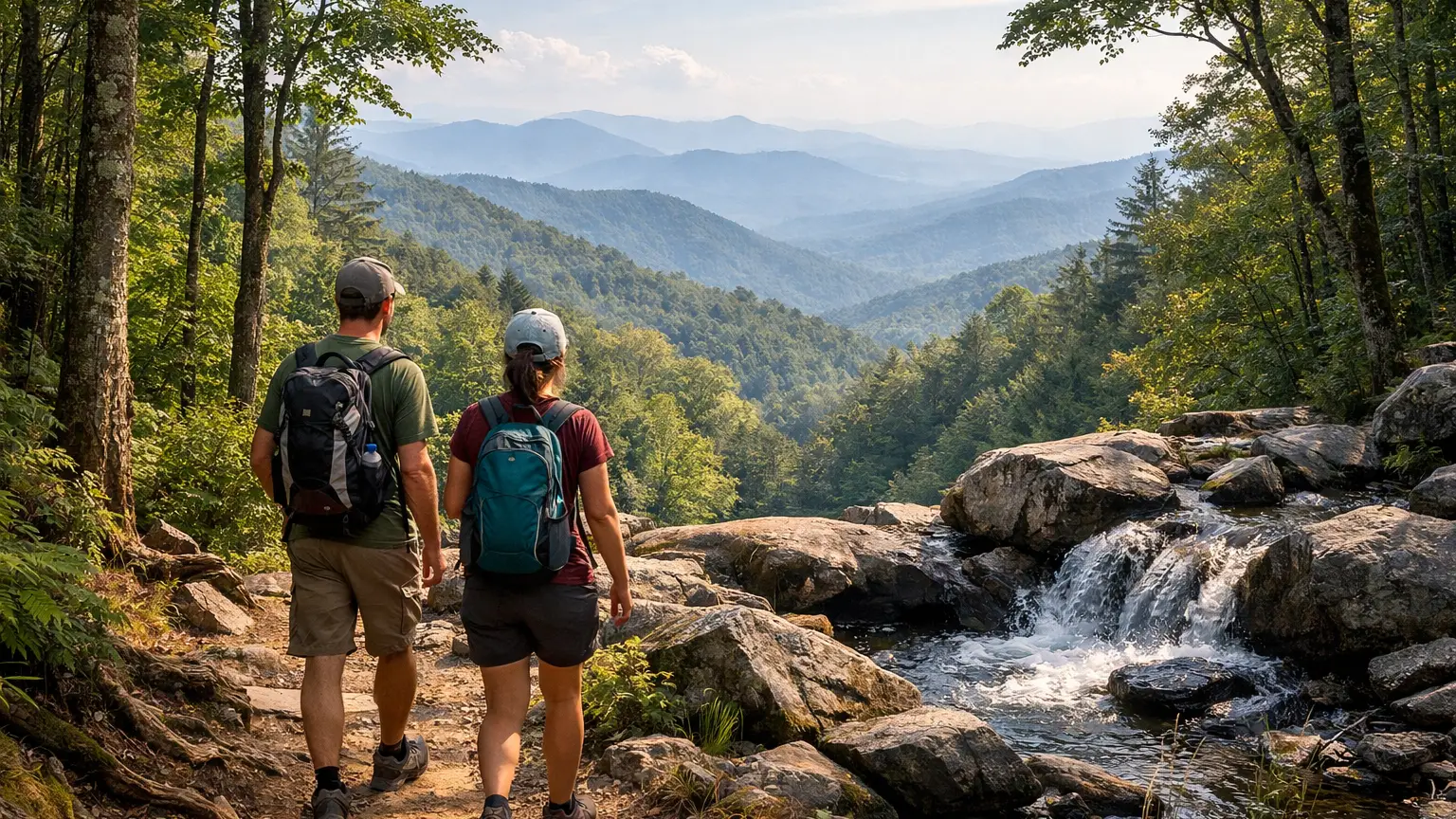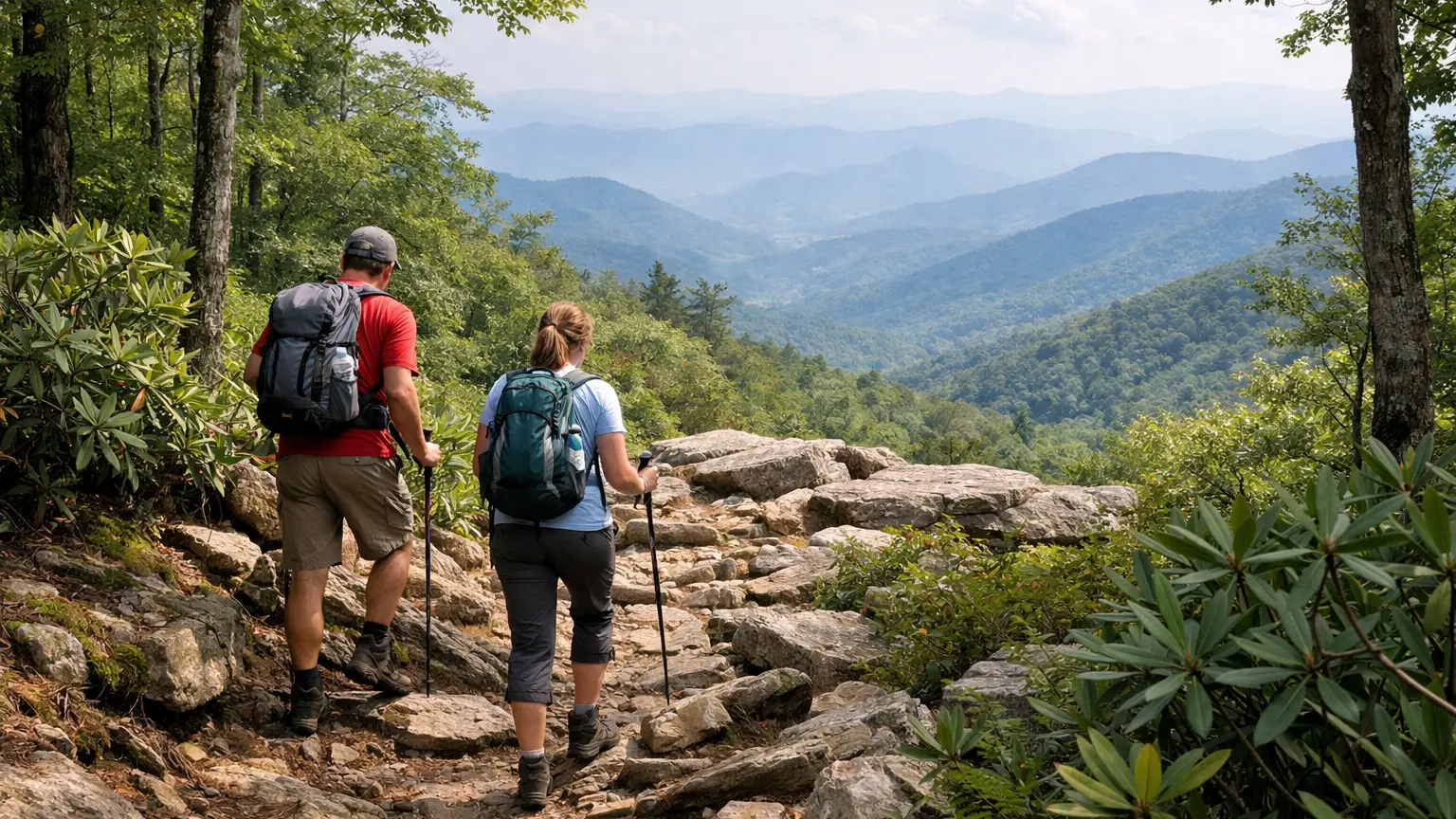
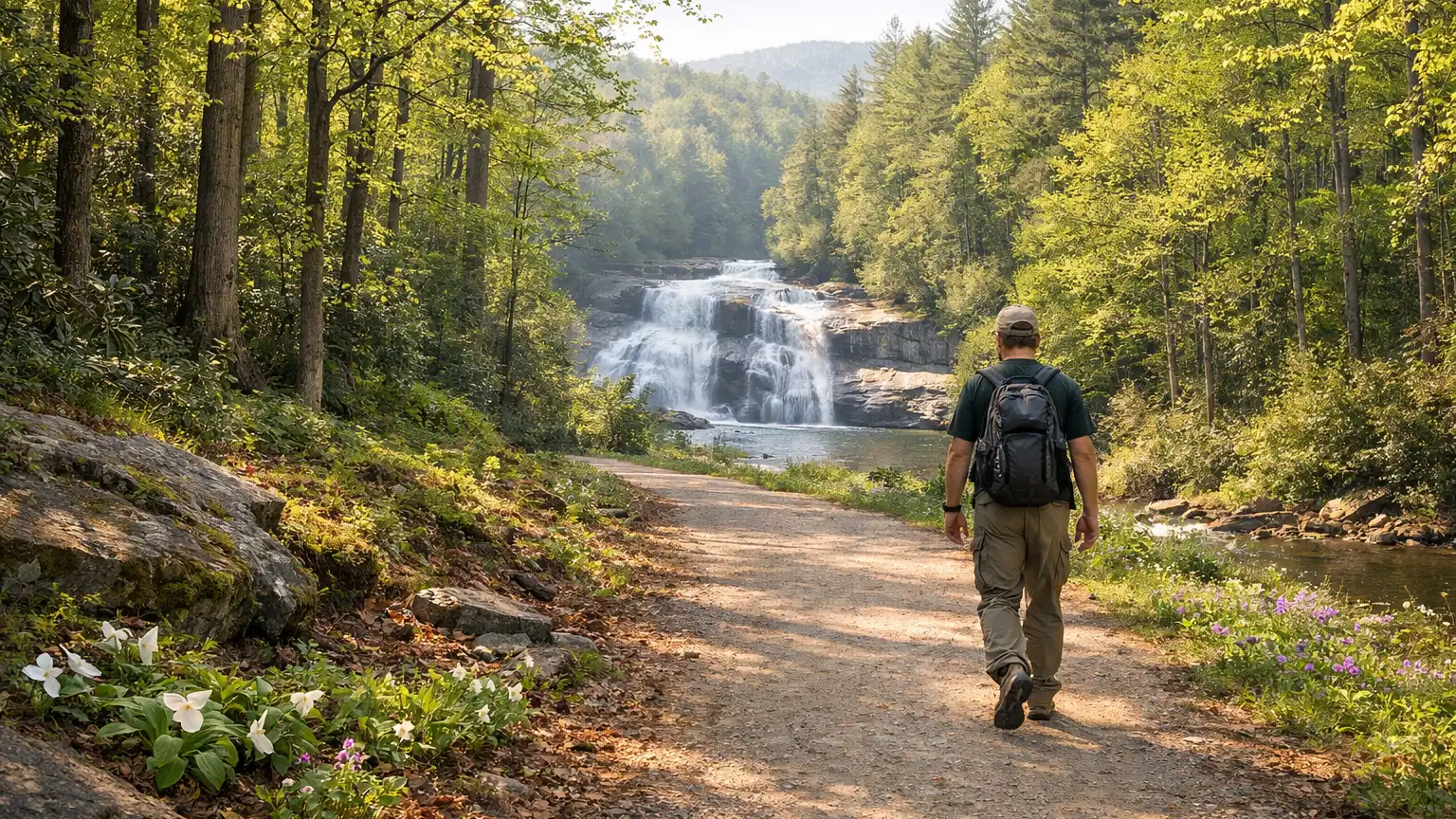
Spring in DuPont State Forest is a trade-off, and if you’ve hiked here more than once you already know it: the waterfalls are running higher and louder after winter rain, the understory is greening up, but the parking lots fill fast on any clear weekend once word gets out that the falls are worth the trip. This page is built around one decision — which trail actually fits your day, whether that’s a quick 20-minute waterfall stop with kids in tow, a longer multiuse loop for a real workout, or something in between before the forest gets crowded in summer. We’ve grouped the verified trails in this cluster by what they actually deliver in spring, not by generic difficulty labels, and added the trailhead and seasonal notes we’d tell a friend before they drove out.
Spring Hikes Worth Your Time in DuPont State Forest
1. Hooker Falls Trail (0.4 mi)
Short, flat, and foot traffic only, this is the easiest waterfall payoff in the forest. Spring runoff makes Hooker Falls noticeably fuller than late summer, and the short distance means you can pair it with Triple Falls Trail without burning half your day.
2. Triple Falls Trail (0.4 mi)
Another short, foot-traffic-only trail, and one of the most photographed spots in the forest for good reason — three distinct drops visible from the trail. In spring, higher water volume makes the middle and lower drops genuinely more dramatic than they are by August.
3. Grassy Creek Falls Trail (1.0 mi)
A bit longer than the Hooker/Triple pair but still foot traffic only, which keeps it quieter. This is a good pick if you want a waterfall hike with a little more walking and noticeably fewer people around it in spring.
4. High Falls Loop (approximately 2 mi loop)
This loop gives you a fuller morning without committing to the forest’s longest multiuse trails. It’s a solid middle-ground option in spring — enough distance to feel like a real hike, with a waterfall payoff that justifies the extra mileage over the shorter falls trails.
5. Bridal Veil Falls Road (0.6 mi)
A short walk to another waterfall, useful if you’re stringing together multiple falls in one visit. Spring water levels make this one worth the short detour even if it’s not the tallest or most dramatic drop in the forest.
6. Wintergreen Falls Trail (0.5 mi)
Short and often overlooked compared to Hooker and Triple, which makes it a good pick if you’re trying to avoid the busiest pockets of the forest on a spring weekend.
7. Cascade Loop (3.1 mi)
A multiuse loop that gives you more sustained distance than the waterfall-only trails, useful in spring when trail surfaces have dried out enough for a longer outing without the summer heat working against you.
8. Corn Mill Shoals Trail (2.7 mi)
Another multiuse option worth considering if you want mileage beyond the short falls walks. It’s a reasonable choice for a spring morning when you want a longer stretch of trail without tackling the forest’s longest routes.
How We Ranked These
Waterfall payoff relative to distance: for a spring-focused list, we weighted trails where higher seasonal water flow genuinely changes the experience — the short falls trails earn their spot because spring runoff makes them look different than they do in July.
Foot traffic vs. multiuse crowding: foot-traffic-only trails like Hooker, Triple, Grassy Creek, and Wintergreen tend to feel calmer in spring since they don’t share the path with bikes and horses, which matters if you’re hiking with young kids.
Distance flexibility: we included a mix of very short walks and longer multiuse loops so this list works whether you have an hour or half a day, rather than assuming everyone wants the same length of hike.
Honest exclusions: we left Turkey Knob Trail off this primary list since its bridge closure limits it to a partial out-and-back, and Reasonover Creek and Big Rock aren’t waterfall-focused, so they fit a different angle better than a spring waterfall list.
Parking and Trailhead Reality
DuPont’s most popular trailheads, especially the ones feeding Hooker Falls and Triple Falls, are known for filling up on clear spring weekends, particularly mid-morning through early afternoon. If you’re set on hiking the short falls trails, arriving earlier in the day gives you a real shot at parking without circling. Some of the access roads in the forest are gravel, so give yourself a little extra time on the drive in, especially after spring rain when conditions can be softer than usual. Check current conditions before you go, since lot availability and road conditions can shift with weather and maintenance.
Seasonal Notes for Spring Hiking
Spring is arguably the best window for the waterfall trails in this cluster — snowmelt and seasonal rain keep water volume up at Hooker Falls, Triple Falls, Grassy Creek Falls, Bridal Veil Falls, and Wintergreen Falls in ways that make the short hikes feel worth the trip even at under a mile. That said, spring rain also means trail surfaces on the longer multiuse routes like Cascade Loop and Corn Mill Shoals can be muddier than summer, so plan for some wet or uneven footing. Turkey Knob Trail’s bridge closure roughly half a mile from the Pinnacle Mountain gate is worth knowing about if you’re tempted to use it as a longer spring option — it’s still walkable as an out-and-back to that point, but not as a through-hike right now.
What to Bring
Waterproof or at least water-resistant footwear is worth it in spring given how often the ground stays damp near the falls trails. Trekking poles help on the longer multiuse loops if the surface is soft from rain. Bring more water than you think you need on Cascade Loop or Corn Mill Shoals, since there’s more sustained walking than the short falls trails. And if you’re combining several waterfall stops in one visit, budget extra time — the distances are short individually, but they add up along with parking and photo stops.
Frequently Asked Questions
Which DuPont waterfall hike is best for spring water flow?
Triple Falls and Hooker Falls tend to show the most noticeable seasonal change, since spring runoff adds real volume compared to drier months.
Are any of these trails good for avoiding crowds in spring?
Grassy Creek Falls Trail and Wintergreen Falls Trail are generally quieter than Hooker Falls and Triple Falls, even though they’re all foot-traffic-only routes.
Can I still hike Turkey Knob Trail in spring?
Yes, as an out-and-back up to the point roughly half a mile from the Pinnacle Mountain gate, since the bridge beyond that point is closed.
Is DuPont State Forest muddy in spring?
Sections of the multiuse trails, particularly Cascade Loop and Corn Mill Shoals, can get muddy after spring rain, so check current conditions before heading out.
Do I need a permit to hike these trails?
The verified data for this cluster doesn’t list permit requirements for these specific trails; check current forest guidance before your visit.
If you want to compare every verified trail in this area side by side — filtered by distance, difficulty, and current conditions — browse the full WNC Trails directory at WNC Trails directory. As always, check current conditions before you head out, since spring weather in DuPont can shift trail and parking conditions quickly.
Related Pages
- Summer Hikes In Dupont State Forest
- Short Dupont State Recreational Forest Hikes
Want more routes in this area? See our complete guide to DuPont State Recreational Forest hikes.