Not every trail in Pisgah National Forest is a casual afternoon walk, and if you’re searching for the hard Pisgah National Forest hikes, you’re probably past the point of wanting another easy loop with a nice view at the end. This page is for hikers who want steep elevation, exposed rock, long mileage, or all three. We’ve hiked these trails ourselves and talked to enough locals to know which climbs are genuinely tough versus which ones just have a reputation. Below you’ll find the trails in this cluster that actually earn a ‘strenuous’ label, why each one is worth the sweat, and what to know before you commit a full day to one of them.
The Hardest Trails in This Pisgah Cluster
1. Old Butt Knob Trail (3.6 mi, Strenuous)
This is arguably the toughest mileage-for-mileage climb on this list. Old Butt Knob packs roughly 2,500 feet of elevation change into 3.6 miles, which means sustained, relentless climbing rather than the occasional steep pitch. In exchange, you get views of Shining Rock Wilderness from several knobs along the way. If you want a short hike that hits like a much longer one, this is it.
2. Art Loeb Trail — Section 1 (12.3 mi, Strenuous)
This is less a hike and more a commitment. At 12.3 miles, Section 1 is built for backpackers, passing Butter Gap Shelter, which has a spring nearby for water resupply. It’s strenuous by distance and terrain both, and it’s the kind of trail you plan a full day or overnight around rather than squeeze in before lunch.
3. Black Mountain Trail (9.8 mi, Strenuous)
Another long backpacking-style route, Black Mountain Trail runs 9.8 miles and passes Buckhorn Gap shelter, also with a nearby spring. This one rewards hikers who want solitude and mileage over a quick summit payoff — it’s a grind, but a rewarding one if you’re training for longer treks or just want a full day in the woods without crowds.
4. Linville Gorge Trail #231 (about 9 mi, primitive, Strenuous)
This trail follows the Linville River into the gorge and is about as rugged as marked trails get in this area — primitive tread, no easy shortcuts, and real navigation demands. Note that backcountry camping here requires a permit on weekends and holidays from May through October, so plan accordingly if you’re staying overnight.
5. Cold Mountain Trail (1.4 mi, Strenuous)
Short on paper, brutal in practice. Cold Mountain Trail climbs about 900 feet in just 1.4 miles, ending in summit views from exposed rock. This is a good option if you want a strenuous hike that doesn’t eat your whole day, but don’t let the short distance fool you — the grade is unforgiving.
6. Art Loeb Spur Trail (0.6 mi, Strenuous)
At 0.6 miles this is the shortest trail on the list, but it’s steep enough to earn its strenuous rating, gaining about 200 feet in a hurry. The payoff is panoramic views reaching up to 70 miles on a clear day. Often paired with a longer Art Loeb section hike as a side trip, it’s proof that short doesn’t mean easy in Pisgah.
7. Looking Glass Rock Trail (3.1 mi, Moderate)
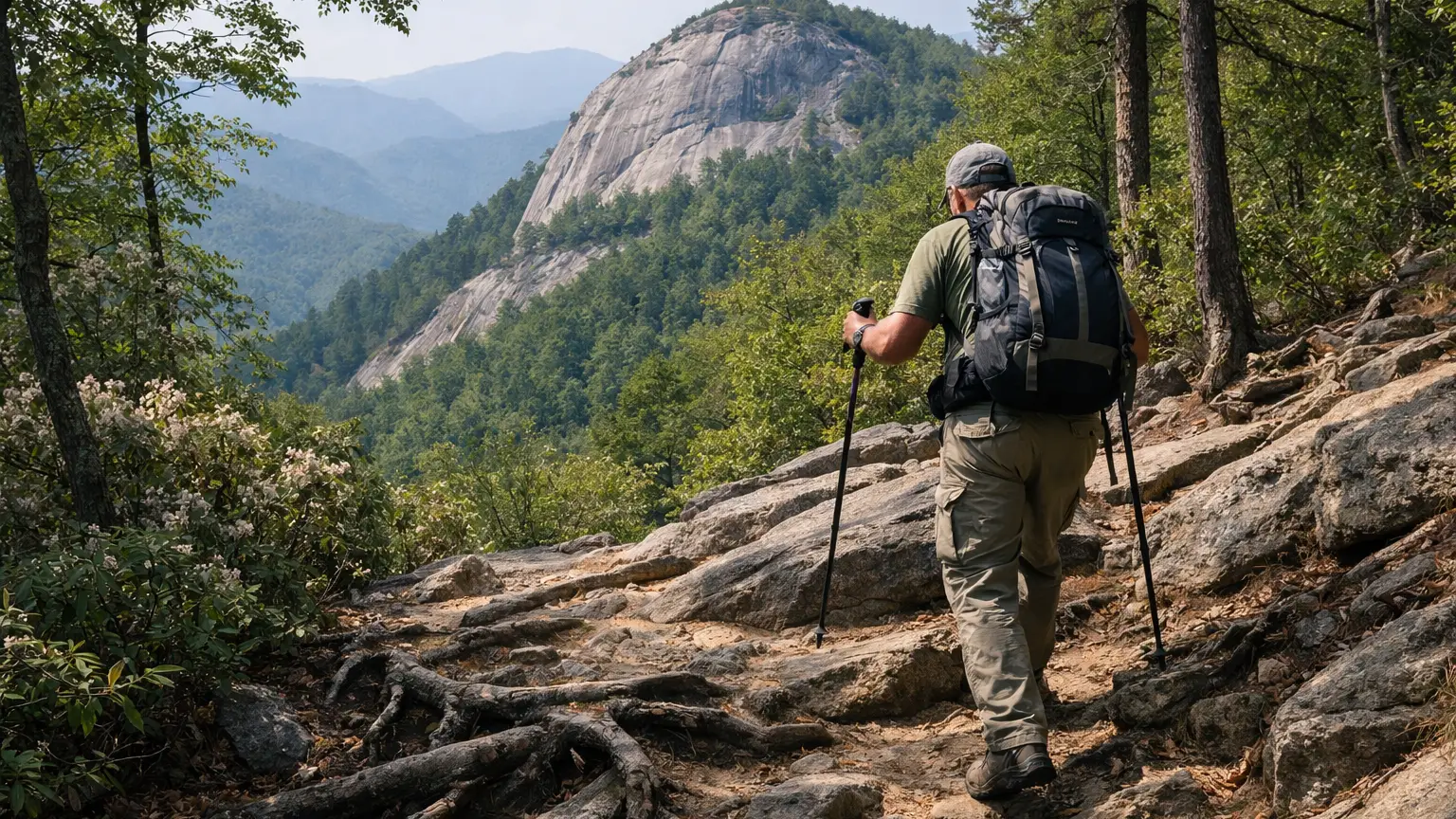
Officially moderate rather than strenuous, but with about 1,700 feet of elevation change over 3.1 miles, this trail climbs harder than most ‘moderate’ labels suggest. We’re including it here because plenty of hikers find the sustained grind to the panoramic summit view tougher than some trails rated strenuous elsewhere. If you’re building toward the harder trails above, this is a solid gauge of your fitness.
How We Ranked These
We didn’t just sort by mileage. A few factors mattered more:
- Elevation change relative to distance: A short trail with a steep grade, like Old Butt Knob or Cold Mountain, can feel harder than a longer trail with gradual climbing. We weighted this heavily.
- Terrain and footing: Primitive trails like Linville Gorge #231 demand more from hikers than well-maintained forest service trails, even at similar distances.
- Commitment level: Backpacking routes like Art Loeb Section 1 and Black Mountain Trail require more planning, water strategy, and time than a single strenuous day hike, so they rank differently than a tough half-day trail.
- Honest difficulty versus official rating: We included Looking Glass Rock Trail even though it’s technically rated moderate, because its elevation gain puts it in the same conversation as several strenuous trails on this list.
Parking and Trailhead Reality
Pisgah’s popularity means trailhead parking for well-known hikes fills up fast, especially on weekends. Trails tied to iconic features or shared trailheads with more casual hikes — anything near Looking Glass Rock, for instance — tend to see the most competition for a spot. Backpacking trailheads for routes like Art Loeb Section 1 and Black Mountain Trail are generally quieter, but that also means less foot traffic if something goes wrong, so let someone know your plan. Access roads throughout the forest can include gravel stretches, and conditions shift with weather, so it’s worth checking current conditions and road status before you drive out, particularly for the more remote trailheads like those serving Linville Gorge.
Seasonal Notes
Exposed summit and ridge trails on this list — Cold Mountain, Art Loeb Spur, Old Butt Knob — can carry ice and wind exposure in winter that make already-strenuous climbs riskier. Fall brings leaf-season crowds to the more scenic overlooks, which can mean fuller parking areas even on trails that are otherwise quiet. For the long backpacking routes, spring and fall generally offer more comfortable temperatures for sustained mileage than summer’s heat and humidity. Whatever season you go, check current conditions before heading out, since trail and weather conditions in Pisgah can change quickly at elevation.
What to Bring
For any of the strenuous day hikes on this list, bring more water than you think you need — steep, sustained climbs burn through hydration faster than flat mileage. Trekking poles help significantly on trails like Old Butt Knob and Cold Mountain, where the descent can be as hard on your knees as the climb is on your lungs. For the backpacking routes, plan your water resupply around the shelters and springs mentioned above, but treat all water sources regardless. If you’re heading into Linville Gorge for an overnight stay during peak season, secure your backcountry camping permit ahead of time for weekends and holidays between May and October — rangers do check.
Frequently Asked Questions
What is the hardest hike in this Pisgah cluster?
By elevation gain relative to distance, Old Butt Knob Trail is the toughest day hike here, climbing about 2,500 feet in 3.6 miles. For overall commitment, the Art Loeb Trail Section 1 backpacking route is the biggest undertaking at 12.3 miles.
Do I need a permit for any of these trails?
Backcountry camping in Linville Gorge along Trail #231 requires a permit on weekends and holidays from May through October. The other strenuous trails on this list don’t have a permit requirement noted, but always check current regulations before you go.
Are any of these hard trails good for beginners building up to strenuous hikes?
Looking Glass Rock Trail is a reasonable middle step — it’s officially rated moderate but has enough elevation change to test your legs before you tackle something like Old Butt Knob or Cold Mountain.
Can I do the backpacking routes as a long day hike instead?
Both Art Loeb Section 1 and Black Mountain Trail are long enough that most hikers treat them as overnight trips, but a strong day hiker in good conditions could attempt a there-and-back or partial section. Just plan your turnaround time carefully given the mileage involved.
Which trail has the best payoff for the effort?
Art Loeb Spur Trail is hard to beat here — at just 0.6 miles, it delivers panoramic views up to 70 miles for a relatively small time investment, even though the grade is steep.
If you’re weighing these hard Pisgah National Forest hikes against your own fitness, schedule, or gear, it’s worth browsing the full WNC Trails directory to compare every verified trail near this area by difficulty, distance, and current conditions. You can find that at /directory-category/trails-hiking/. As always, check current conditions before you head out, especially for the higher-elevation and backcountry routes on this list.
Related Pages